
Charleston backyard clearing is the professional removal of trees, brush, overgrown vegetation, and storm debris from residential property to improve safety, usability, or prepare land for development. Known in the industry as residential land clearing, this process follows strict local environmental regulations that protect Charleston’s coastal wetlands and native ecosystems. Whether you’re dealing with hurricane damage, reclaiming an overgrown lot, or prepping for a new outdoor space, understanding what is Charleston backyard clearing means knowing the permits, methods, and professionals involved before a single branch hits the ground.
What is charleston backyard clearing and why does it matter?
Charleston backyard clearing is defined as the systematic removal of unwanted vegetation, fallen trees, stumps, and debris from a residential property. The process covers everything from light brush removal to full-scale wooded lot clearing. What separates Charleston from other markets is the regulatory environment. The city sits within the South Carolina Lowcountry, a region with sensitive tidal wetlands, protected tree canopies, and strict stormwater rules. That means a job that takes one afternoon in a drier inland state can require weeks of planning here.
The standard industry term for this work is residential land clearing. Backyard clearing is a subset of that category, focused on the area behind or around a home rather than a raw development parcel. Salvationlandmanagement handles both, but the residential scope is where most Charleston homeowners start. The combination of subtropical vegetation growth, frequent storm events, and tight municipal oversight makes professional guidance the practical choice for most properties.
What permits do charleston homeowners need for backyard clearing?
Permits are the first thing to research before any clearing project begins. A land disturbance permit is mandatory in Charleston for any project disturbing more than 5,000 square feet of land. That threshold is smaller than most homeowners expect. A standard suburban backyard can cross it quickly once you factor in tree root zones and grading.
Tree removal permits are required when clearing involves protected or heritage trees, and they apply to both residential and commercial properties. Charleston’s tree ordinance protects species like live oaks above a certain trunk diameter. Removing one without a permit can result in significant fines and mandatory replanting requirements.
Stormwater and erosion control permits add another layer. These require a sediment management plan to prevent runoff from entering Charleston’s tidal creeks and coastal waterways. The permitting process typically involves a licensed survey and an engineered erosion control plan. That plan must be submitted and approved before clearing equipment arrives on site.
One detail that trips up many homeowners is jurisdictional variation. The permitting process varies between the City of Charleston, Charleston County, Mount Pleasant, North Charleston, and neighboring municipalities like James Island and Johns Island. A project in Mount Pleasant follows different rules than the same project two miles away inside city limits. Always confirm which jurisdiction governs your parcel before submitting any application.
The general permitting steps follow this order:
- Confirm your parcel’s jurisdiction and applicable municipal codes.
- Commission a licensed survey to identify property boundaries and protected features.
- Identify any heritage or protected trees requiring individual removal permits.
- Hire a licensed engineer to prepare an erosion control plan if required.
- Submit all applications and wait for written approval before starting work.
Pro Tip: Contact your local planning department before hiring any contractor. Permit timelines in Charleston can run two to four weeks, and starting work without approval can halt your project entirely.
What are the most effective backyard clearing methods in charleston?
The right clearing method depends on your property size, vegetation density, and goals. Charleston properties present a specific challenge: dense subtropical growth, sandy coastal soils, and proximity to wetlands all influence which technique delivers the best result.
Forestry mulching
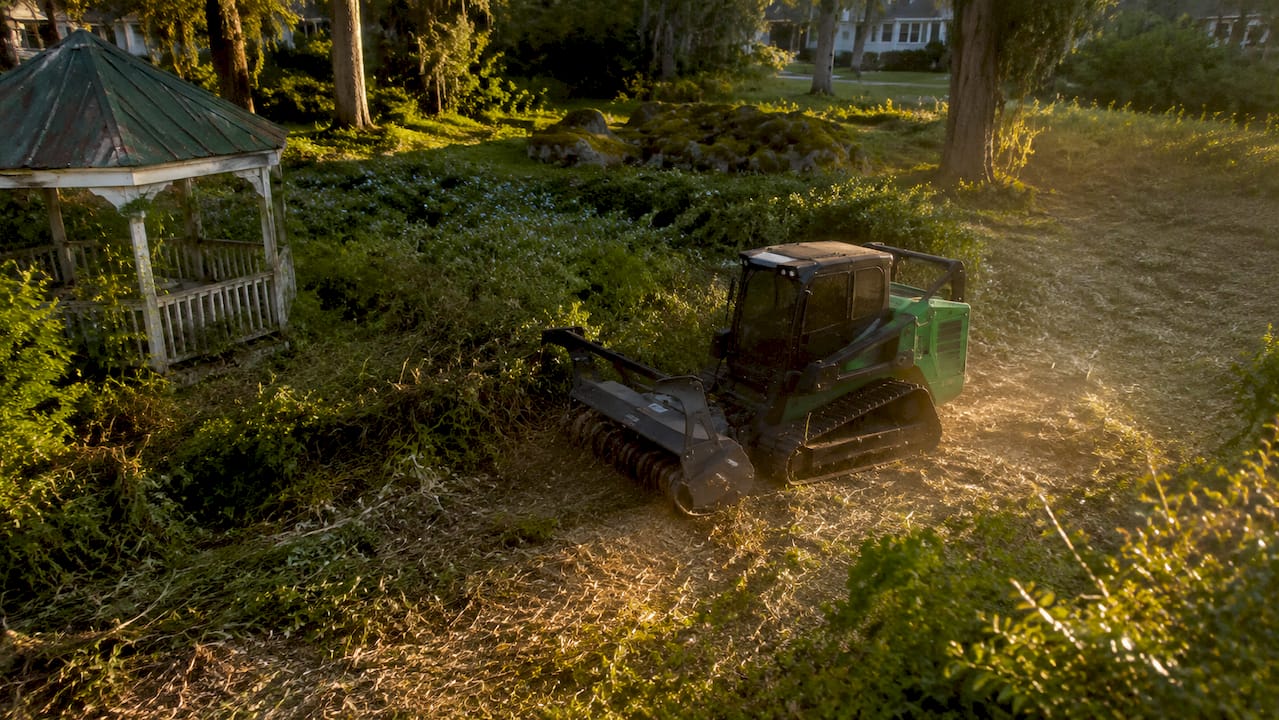
Forestry mulching is an environmentally responsible clearing method that grinds trees and brush into mulch directly on site. It uses a single specialized machine to cut, grind, and spread material in one pass. The mulch layer left behind protects the soil surface, reduces erosion, and adds organic matter. For Charleston properties near wetlands, this method minimizes soil disturbance better than any alternative. Salvationlandmanagement uses forestry mulching as a primary method for residential lots where ecological sensitivity is a concern.
Bush hogging
Bush hogging uses a tractor-mounted rotary cutter to clear thick brush, tall grass, and light woody growth. It covers large areas quickly and works well for overgrown fields or rear lots that haven’t been maintained in years. Bush hogging does not remove stumps or roots, so it pairs well with follow-up stump grinding when full clearing is the goal.
Chainsaw clearing and stump grinding
Manual chainsaw clearing handles individual trees and targeted removal where machinery cannot reach. Stump grinding follows tree removal to eliminate root systems and allow replanting or construction. This combination is the standard approach for post-storm cleanup, where fallen trees need precise removal without disturbing surrounding structures or landscaping.
Here is a direct comparison of the four main methods:
| Method | Best Use Case | Environmental Impact | Relative Cost |
|---|---|---|---|
| Forestry Mulching | Wooded lots, wetland-adjacent properties | Low, protects soil | Moderate to high |
| Bush Hogging | Large overgrown areas, brush fields | Low to moderate | Low to moderate |
| Chainsaw Clearing | Targeted tree removal, storm debris | Moderate, manual disturbance | Moderate |
| Stump Grinding | Post-removal root elimination | Low | Low to moderate |
Pro Tip: After a hurricane or tropical storm, prioritize chainsaw clearing for fallen trees first, then assess whether forestry mulching or stump grinding is needed for the remaining root systems. Mixing methods on the same project is common and often the most cost-effective approach.
How should you assess and prepare your backyard for clearing?
Preparation determines whether a clearing project runs smoothly or stalls. Skipping the assessment phase is the most common mistake Charleston homeowners make. Follow these steps before any contractor arrives:
- Walk the property and document what you see. Note tree species, approximate trunk diameters, standing water areas, and any structures near the clearing zone. Photographs help when discussing scope with contractors.
- Identify your clearing goal clearly. Storm cleanup, landscaping prep, and construction preparation each require different methods and permit types. Knowing your goal upfront prevents scope changes mid-project.
- Locate protected trees and sensitive areas. Live oaks, cypress trees, and areas within 25 feet of a wetland boundary often carry special protections. A licensed arborist or land clearing professional can flag these before work begins.
- Decide between professional service and DIY. Hiring professional land clearing services significantly improves compliance with local regulations and reduces the risk of fines. For projects over 5,000 square feet or involving protected trees, professional service is the practical choice, not just a convenience.
- Plan for debris disposal. Brush, stumps, and logs require disposal or on-site processing. Forestry mulching handles this automatically. Other methods require hauling, which adds cost and scheduling time.
- Consider seasonal timing. Spring and early summer bring rapid vegetation regrowth in Charleston. Clearing in late fall or winter slows regrowth and gives new plantings a better start. Post-storm clearing, however, requires immediate action regardless of season.
Clearing wooded backyards after storms is critical for safety and preventing further property damage. Storm debris left in place attracts pests, creates fire hazards, and can damage fencing or foundations over time. Quick action paired with proper disposal is the standard professional recommendation.
What are the benefits and environmental impacts of backyard clearing?
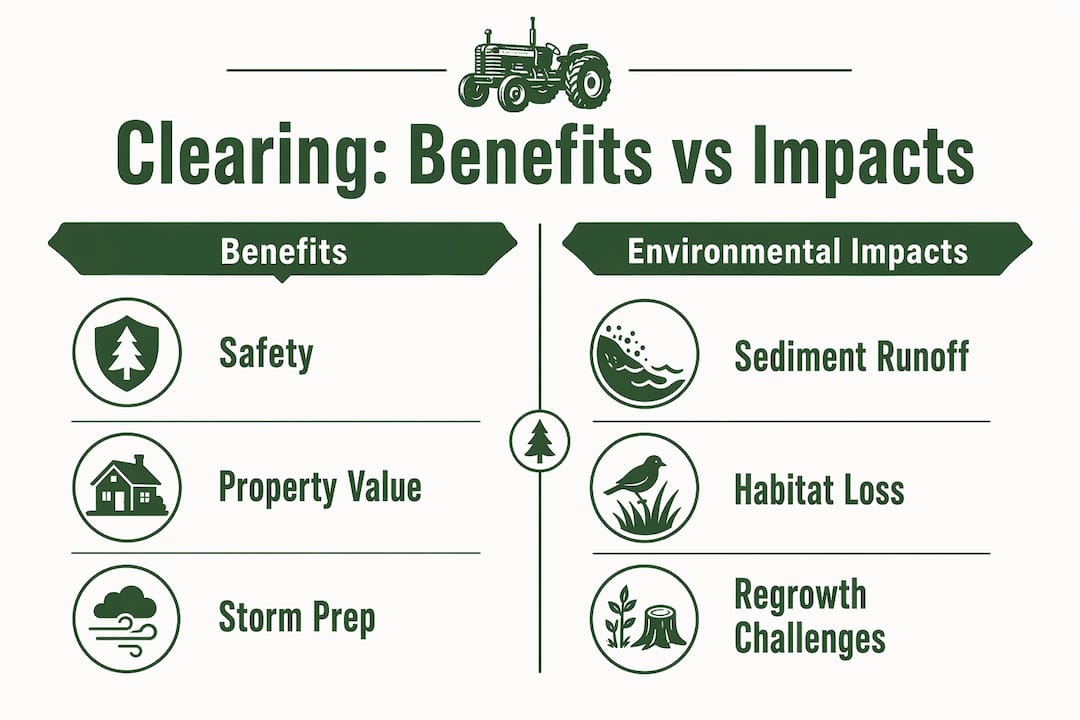
Backyard clearing delivers measurable benefits when done correctly. The most direct gains for Charleston homeowners include:
- Improved safety. Fallen trees, dead limbs, and dense brush create hazards for children, pets, and structures. Clearing eliminates these risks.
- Better pest control. Overgrown vegetation provides habitat for mosquitoes, ticks, and rodents. Clearing reduces harborage areas significantly.
- Higher property value. A cleared, maintained lot is more attractive to buyers and appraisers. Usable outdoor space is a direct value driver in the Charleston real estate market.
- Easier access for maintenance. Cleared land allows regular mowing, inspection, and landscaping work that is impossible in dense overgrowth.
The environmental risks are real but manageable. Improper land clearing causes increased sediment runoff that harms nearby rivers and coastal ecosystems. Charleston’s tidal creeks and coastal reefs are directly downstream from most residential properties. Responsible clearing with proper erosion controls is not optional. It is the standard required by permit and enforced by municipal inspectors.
Professional services like those offered by Salvationlandmanagement address these risks through compliant planning, appropriate method selection, and post-clearing erosion management. The goal is a cleared property that stays stable, drains correctly, and supports healthy regrowth where desired.
Key takeaways
Effective Charleston backyard clearing requires the right permits, the right methods, and professional execution to protect both your property and the surrounding ecosystem.
| Point | Details |
|---|---|
| Permits come first | Projects over 5,000 sq ft require a land disturbance permit before any clearing begins. |
| Method selection matters | Forestry mulching suits wetland-adjacent lots; bush hogging covers large overgrown areas efficiently. |
| Jurisdiction varies | Rules differ between Charleston city, Charleston County, Mount Pleasant, and North Charleston. |
| Storm debris needs fast action | Post-storm clearing prevents pest infestations, structural damage, and ongoing safety hazards. |
| Professional service reduces risk | Licensed contractors handle permits, protect heritage trees, and manage erosion control correctly. |
What i’ve learned after years of watching backyard clearing projects go wrong
The most consistent mistake I see Charleston homeowners make is treating backyard clearing as a landscaping job rather than a land management project. They hire a lawn crew, skip the permit research, and end up with a stop-work order or a fine for removing a protected live oak. That mistake costs more to fix than the original clearing would have cost to do correctly.
The second pattern I notice is underestimating how fast vegetation returns in the Lowcountry. A cleared backyard in Charleston can be chest-high in brush within two growing seasons without a maintenance plan. Clearing is not a one-time fix. It is the start of an ongoing property management routine.
My honest recommendation is to start with a professional site assessment before committing to any method or timeline. A qualified land clearing contractor will identify permit requirements, flag protected trees, and recommend the right equipment for your specific lot. That conversation costs nothing and prevents the expensive surprises that come from skipping it.
One more thing worth saying directly: forestry mulching is underused on residential properties. Most homeowners have never heard of it, but it is often the fastest, cleanest, and most ecologically responsible option for Charleston backyards. If your contractor does not mention it, ask about it.
Get your Charleston backyard cleared the right way
Salvation Land Management provides professional land clearing services in Charleston for residential and commercial properties across the Lowcountry, including Mount Pleasant, North Charleston, James Island, and Johns Island. Their team handles permit research, protected tree identification, and method selection so you do not have to navigate the process alone.
Whether you need post-storm debris removal, a full wooded lot cleared, or targeted tree removal in Charleston, Salvationlandmanagement delivers on schedule and within budget. Contact them directly for a site assessment and project quote tailored to your property.
FAQ
What is charleston backyard clearing?
Charleston backyard clearing is the professional removal of trees, brush, stumps, and debris from residential property. It follows local permitting rules and environmental protections specific to the South Carolina Lowcountry.
Do i need a permit to clear my backyard in charleston?
A land disturbance permit is required for clearing projects that disturb more than 5,000 square feet. Tree removal permits apply separately when protected or heritage trees are involved.
What is the best clearing method for a wooded backyard in charleston?
Forestry mulching is the preferred method for wooded lots near wetlands because it grinds vegetation on site and minimizes soil disturbance. Bush hogging works better for large areas of brush and tall grass.
How quickly should i clear storm debris after a hurricane?
Storm debris should be cleared as quickly as possible after it is safe to access the property. Delayed removal increases the risk of pest infestation, structural damage, and ongoing safety hazards.
Does backyard clearing increase property value in charleston?
Cleared, usable outdoor space directly improves property value and curb appeal in the Charleston real estate market. Buyers and appraisers treat maintained lots as a measurable asset.
Recommended
- Land Clearing vs Forestry Mulching: Which Method is Right for Your Charleston Property? | Salvation Land Management
- When Should You Remove a Tree Instead of Pruning It in Charleston
- Land Clearing Charleston, SC | Salvation Land Management
- Land Management Services Charleston, SC | Salvation Land Management