
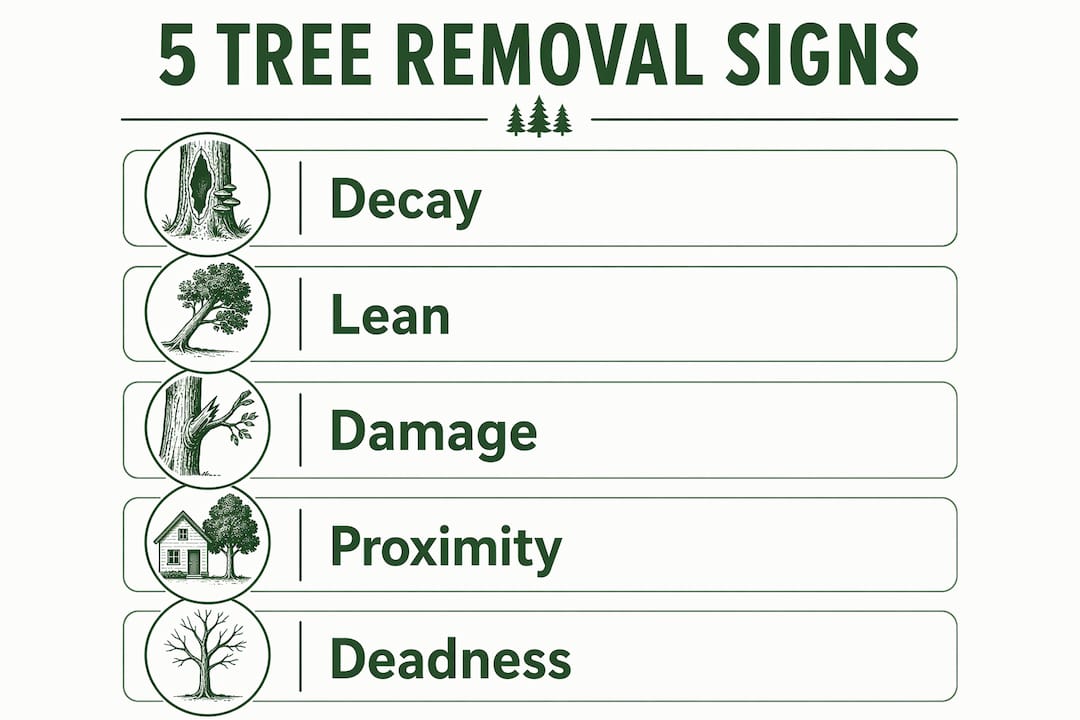
Removing a tree from your James Island property is necessary when it shows specific dangerous signs that compromise safety and structural integrity. The five critical indicators are: visible disease and decay, leaning with root failure, structural cracks or splits, hazardous proximity to structures or utilities, and complete tree death. Each of these conditions represents a genuine risk to your home, your family, and your neighbors. James Island’s coastal weather, saturated soils, and hurricane exposure make these risks more urgent than in inland areas. Knowing what to look for before a storm hits is the most practical form of property tree management you can practice.
What visible signs of tree disease and decay indicate removal is necessary
Fungal growth and internal decay are the clearest disease-based indicators that a tree needs to come down. Fungal conks or mushrooms near the base of a trunk signal that internal rot has already progressed significantly. By the time you see fungi on the outside, the structural wood inside is often compromised far beyond what the surface reveals.
Other visible disease indicators include:
- Bark peeling or falling away in large sections without regrowth underneath
- Deep cracks or cavities in the trunk that expose hollow interior wood
- Leaf discoloration or premature drop across most of the canopy, not just one branch
- Dead branches concentrated in the upper crown, sometimes called “dieback”
- Soft, spongy wood at the base when pressed, indicating wet rot
Internal decay may be extensive even when the trunk surface looks intact from a distance. This is why a tree health assessment should focus on the trunk base, visible cavities, and fungal presence rather than leaf color alone. A tree that looks green and full in July can still be structurally unsound at its core.
Leaf discoloration matters most when it appears across the whole tree rather than isolated limbs. Yellowing, browning, or early fall color in midsummer on a James Island live oak or loblolly pine points to systemic stress, not seasonal change. That distinction is worth noting before you assume the tree will recover on its own.
Pro Tip: Walk around the base of your trees after heavy rain. Wet conditions cause fungi to fruit and become visible when they otherwise stay hidden. Early detection gives you time to schedule removal before the next storm season.
How leaning trees and root problems signal structural failure
A new or worsening lean is one of the most urgent tree removal signs a homeowner can observe. New lean after a storm combined with soil movement at the root plate is a strong warning that the root system is actively failing. The key distinction is between a tree that has always grown at a slight angle and one that has visibly shifted position in recent weeks or months.
Root failure signs to watch for on your property:
- Soil heaving or cracking on the uphill side of a leaning tree
- Lifted or exposed roots pulling away from the ground
- Gaps forming between the soil and the base of the trunk
- Sunken or disturbed ground in a circular pattern around the base
Soil heaving at the root plate indicates the root plate is actively rotating, which means the tree is in motion toward failure. This can happen even when the canopy looks completely healthy and full. That combination, a green crown above a failing root system, is exactly why visual inspection from the ground is not enough.
James Island’s coastal conditions make root failure especially common. Saturated soil after heavy rain or storm surge reduces the friction that holds root plates in place. Storm damage and saturated soil on coastal properties accelerate structural failure in trees that may appear fine externally. A post-storm walk around your trees, specifically looking at the soil around the base, is one of the most practical tree safety tips you can follow.
Pro Tip: After any named storm or prolonged rain event, check the soil around the base of large trees for cracks running parallel to the trunk. A crack as narrow as an inch can indicate the root plate has already begun to shift.
What structural damage in trunks and limbs means for removal
Cracks, splits, and open seams in a trunk or major limb are direct indicators of structural weakness. Vertical cracks or trunk wounds signal compromised structure that increases failure risk under wind load or added weight from ice or rain. These are not cosmetic issues. They represent points where the wood fiber has separated and can no longer carry the load it once did.
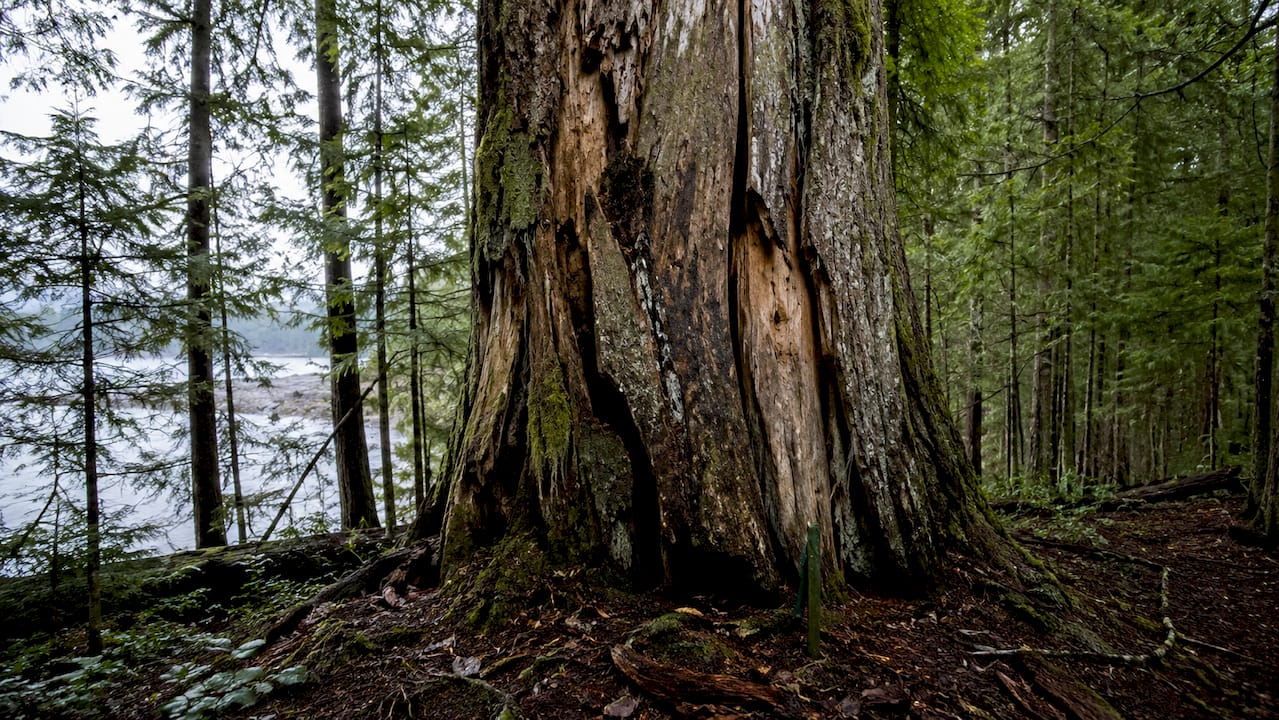
Recent damage is more concerning than old, healed wounds. Expert arborists treat new changes such as sudden lean or new cracks as more urgent than longstanding appearances because they indicate active failure rather than stable old injury. A crack that appeared after last hurricane season deserves immediate professional attention, while a sealed wound from a decade ago may be stable.
Cavity size and location both matter when assessing how to assess tree risk. A cavity in the lower trunk, below the first major branch union, is far more dangerous than one high in the canopy. The lower trunk bears the full weight of the tree and absorbs the most force during wind events. If more than one third of the trunk circumference is affected by a cavity or crack, most arborists consider the tree a removal candidate regardless of other factors.
James Island homeowners should pay particular attention to trees with multiple co-dominant stems, where two trunks of roughly equal size grow from the same base. These unions are prone to splitting under storm load, especially when a bark inclusion forms between the stems. That included bark prevents the wood from fusing properly, creating a built-in failure point.
When proximity to structures and utilities requires tree removal
Tree location relative to your home, driveway, or power lines is a separate risk factor from tree health. Trees near roofs, foundations, or power lines pose high consequences if they fail, even when visible defects are moderate. Risk assessment balances failure likelihood and consequence, and proximity to occupied structures raises the urgency of removal even for trees that look relatively healthy.
Situations where proximity alone justifies removal or professional evaluation:
- A tree whose canopy overhangs your roof by more than a few feet
- Roots visibly lifting your driveway, sidewalk, or foundation
- Any limb in contact with power lines or utility cables
- A tree positioned so that its fall path covers your home, a neighbor’s structure, or a public road
If a tree contacts power lines, do not attempt DIY cleanup. Contact your utility provider first to coordinate safe removal and power de-energization before any cutting begins. This applies even to small limbs that appear to be resting lightly on a line. The risk of electrocution during cutting is real and not worth taking.
For trees near foundations, root intrusion is a slower but equally serious problem. Large tree roots can crack concrete slabs, compromise drainage systems, and undermine the structural base of a home over several years. If you notice new cracks in your foundation or driveway near a large tree, a professional evaluation is the right next step. You can also review guidance on when to remove vs. prune to determine whether targeted work might address the issue before full removal becomes necessary.
Dead trees and why removal cannot wait
A dead tree is defined by the complete absence of living tissue: no leaf production, no new growth, brittle outer bark that separates easily, and wood that snaps rather than bends. Dead trees lose structural integrity faster than most homeowners expect. Without living wood fiber to flex under wind load, a dead trunk becomes brittle and unpredictable, often failing at the base rather than bending and recovering.
Signs that confirm a tree is dead or nearly dead:
- No leaves or buds during the growing season on any part of the tree
- Bark that peels off in large sheets revealing dry, gray wood underneath
- Branches that snap cleanly with no green tissue visible at the break
- Woodpecker activity concentrated on the trunk, which indicates insects feeding in dead wood
Dead trees also attract termites, carpenter ants, and wood-boring beetles. Once those insects establish a colony in a dead tree near your home, they can migrate to your structure. Stump removal after tree cutting is worth considering for the same reason. A remaining stump continues to decay and can serve as a pest entry point for years. For guidance on post-storm removal steps, including how to handle trees that died from storm damage, Salvationlandmanagement has published a practical homeowner guide.
Key takeaways
Recognizing the five signs of tree removal risk on James Island requires assessing decay, lean, structural damage, location, and tree death together rather than in isolation.
| Point | Details |
|---|---|
| Decay and fungal growth | Fungi at the base confirm internal rot; removal is urgent before the next storm. |
| Lean with soil movement | New lean plus heaving soil means the root plate is actively failing and the tree can fall soon. |
| Cracks and cavities | Structural cracks in the lower trunk, especially recent ones, indicate the tree cannot bear wind load safely. |
| Proximity to structures | Trees overhanging roofs or contacting power lines require professional evaluation regardless of apparent health. |
| Dead trees | Dead wood loses flexibility and fails unpredictably; removal should not be delayed once death is confirmed. |
What working on James Island properties has taught me about tree timing
The homeowners who call after a tree has already fallen almost always say the same thing: they noticed something off months earlier but were not sure it was serious enough to act on. That hesitation is understandable. Trees are expensive to remove, and no one wants to cut down a healthy tree by mistake. But on James Island, the margin for error is smaller than in most places.
Coastal properties here face a combination of factors that accelerate tree failure: sandy or saturated soils that reduce root anchorage, salt air that stresses bark and foliage, and a hurricane season that delivers multiple high-wind events in a single year. A tree that might remain stable for another decade in the Upstate can fail in a single storm here.
The permit process in Charleston adds a practical reason to act early rather than late. Protected trees 8 inches DBH or larger require a permit before removal on most residential properties, and the city arborist reviews each application. Scheduling removal before a storm season means you have time to get the permit, hire a qualified crew, and complete the work without the pressure of an emergency. Waiting until a tree is visibly failing often means you are scheduling removal during the same period when every tree service in Charleston is fully booked.
The most practical advice is to schedule an ISA-certified arborist assessment for any tree you are uncertain about, especially after a major storm. Certified arborists produce formal risk classifications that document the hazard level and recommended action. That documentation also helps if you need to demonstrate to your insurer or the city that removal was warranted. Acting on early signs is always less costly than responding to a fallen tree.
How Salvation Land Management helps James Island homeowners with tree removal
Salvation Land Management serves James Island and the broader Charleston Lowcountry with professional tree removal services backed by local knowledge of coastal conditions, city permitting requirements, and the specific tree species common to this area. The team handles permit applications, site assessments, and safe removal from start to finish, so you are not managing the process alone.
Whether you have identified one of the five signs described in this article or you want a professional evaluation of trees you are unsure about, Salvation Land Management provides clear assessments and honest recommendations. The company’s James Island service area page outlines available services and contact options. Reach out to schedule a consultation before storm season puts your property at risk.
FAQ
What are the main signs a tree needs to be removed?
The five primary indicators are visible decay or fungal growth, a new or worsening lean with soil movement, structural cracks or cavities in the trunk, hazardous proximity to structures or power lines, and confirmed tree death. Any one of these conditions warrants a professional evaluation.
Do I need a permit to remove a tree on James Island?
In Charleston, permits are required to remove trees 8 inches DBH or larger on most residential properties. The city arborist reviews applications and may waive mitigation fees for documented hazard removals, so acting before an emergency gives you time to complete the process properly.
How do I know if a leaning tree is dangerous?
A tree that has always leaned slightly may be stable, but a new or worsening lean after a storm is a serious warning sign. Look for soil heaving or cracking on the uphill side of the trunk. That soil movement confirms the root plate is shifting and the tree is at risk of falling.
Can a tree look healthy and still need removal?
Yes. Internal decay and root failure can be extensive even when the canopy appears full and green. Trees near structures or power lines may also require removal based on their location and fall path, even without visible defects.
When should I contact a professional arborist?
Contact an ISA-certified arborist any time you observe new cracks, a changed lean, fungal growth at the base, or a tree that has died. Post-storm inspections are especially important on James Island, where saturated soil and wind damage can create hidden instability that is not visible from the ground.