
Tree pruning is the targeted removal of specific branches to improve tree health and structure, while tree trimming is the cutting back of overgrowth to maintain shape and appearance. These two practices are often used interchangeably, but they serve different purposes and require different techniques. Understanding the distinction between tree pruning vs tree trimming matters because applying the wrong method at the wrong time can stress your trees, create safety hazards, or undermine years of healthy growth. For homeowners and property managers in the Charleston Lowcountry, knowing which service your trees actually need is the first step toward protecting your landscape investment.
What is the difference between tree pruning and tree trimming?
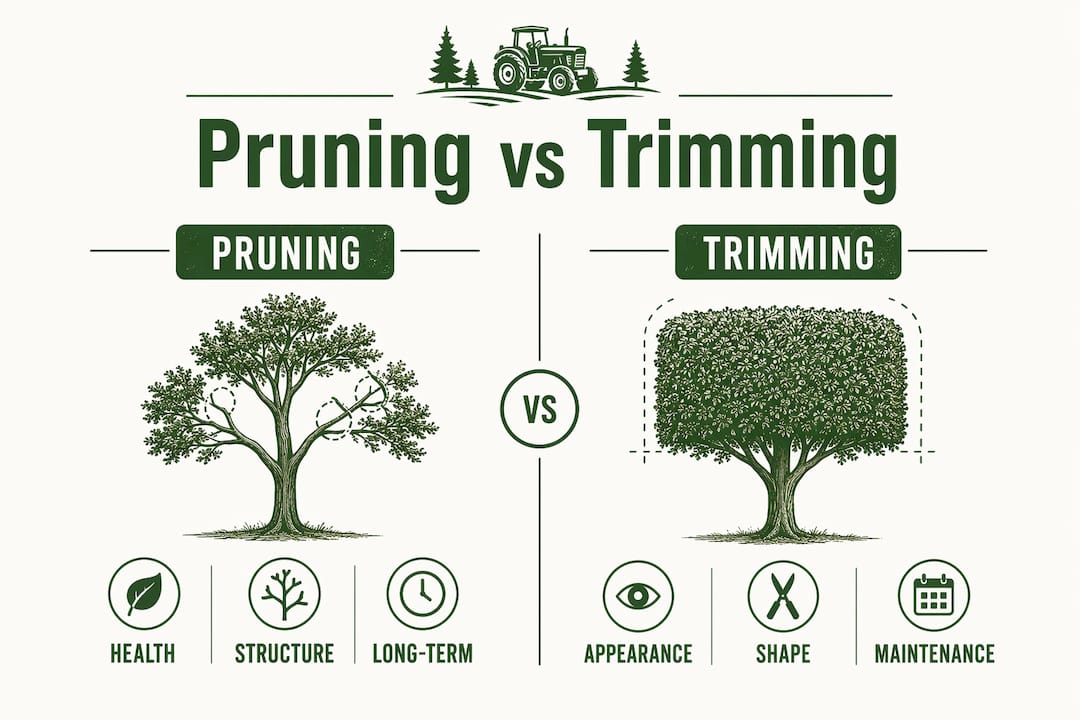
Pruning and trimming differ fundamentally in purpose: pruning targets tree health and risk by removing dead, diseased, or structurally unsound branches, while trimming focuses on shaping the tree and maintaining routine clearance. Think of pruning as a medical procedure and trimming as routine grooming. Both have their place, but confusing one for the other leads to problems.
Tree pruning addresses the long-term structural integrity of a tree. When an arborist prunes, they remove branches that are dead, diseased, damaged, or growing in ways that compromise the tree’s form or safety. The goal is to direct the tree’s energy toward healthy growth and reduce the risk of branch failure. Pruning is a targeted, deliberate process guided by the tree’s biology.
Tree trimming, by contrast, is primarily cosmetic. Trimming maintains tree shape and appearance, prevents branches from obstructing structures, and keeps the overall canopy looking neat and uniform. It is the service you schedule when branches are encroaching on your roofline, blocking a sightline, or simply growing beyond the shape you want. Trimming typically needs to be repeated more frequently than pruning, often twice a year for actively growing trees.
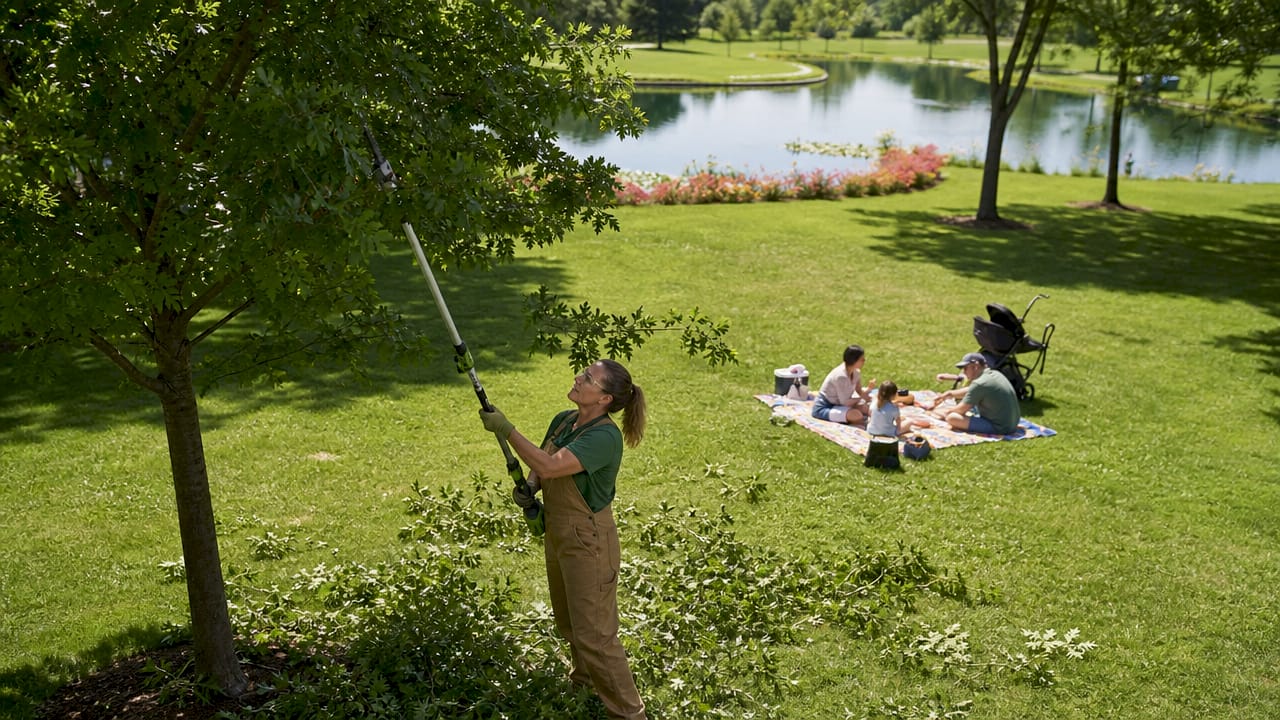
Homeowners who focus only on trimming for appearance may overlook underlying health issues that only pruning can address. A tree can look perfectly shaped on the outside while harboring diseased limbs that pose a real structural risk. Recognizing which problem you are solving determines which service you need.
Key pruning methods used by professionals
Certified arborists rely on four primary pruning approaches, each with a specific purpose:
- Crown thinning: Selective removal of branches throughout the canopy to improve light penetration and airflow, reducing disease pressure without changing the tree’s overall size.
- Crown raising: Removal of lower branches to provide clearance for structures, vehicles, pedestrians, or turf beneath the tree.
- Crown reduction: Reducing the overall size of the canopy by cutting back to lateral branches, preserving the tree’s natural form rather than leaving stubs.
- Crown cleaning: Removal of dead, dying, diseased, or crossing branches to eliminate hazards and improve tree health.
Pro Tip: When requesting professional pruning, ask specifically which crown method applies to your tree. Crown cleaning is appropriate for most routine maintenance, while crown reduction requires more skill and should only be done when necessary.
When and how to prune and trim trees properly
Timing is one of the most consequential decisions in tree care. Pruning during the dormant period in late winter or early spring before bud break reduces pest and disease risk and allows wounds to heal quickly once growth resumes. This timing applies to most deciduous trees, including oaks, maples, and elms common throughout the Charleston area.
Exceptions exist. Spring-blooming trees like dogwoods and redbuds should be pruned immediately after they flower, not before, to avoid cutting off the season’s blooms. Evergreens tolerate pruning at almost any time but respond best when trimmed in late spring after new growth hardens off. Trimming is generally more flexible on timing but should be avoided during extreme heat or drought, when trees are already under stress.
Follow these steps for safe, effective pruning and trimming:
- Inspect the tree first. Identify dead, diseased, or crossing branches before making any cuts. Mark branches you plan to remove and step back to assess the overall structure.
- Select the right tool for the branch size. Hand pruners work for branches under 0.75 inches in diameter, loppers handle branches up to 1.5 inches, and a pruning saw is required for anything larger.
- Make the cut at the branch collar. The branch collar is the slightly swollen area where a branch meets the trunk or parent limb. Cutting flush to the trunk impairs wound closure and invites disease. Leave the collar intact.
- Use staged cuts on large limbs. For heavy branches, make an undercut about 12 inches from the trunk first, then cut from above to remove the bulk of the branch, and finish with a clean cut at the collar. This prevents bark tearing.
- Limit removal to 20% of the canopy. Removing more than 20% of foliage in a single season stresses the tree and can trigger weak, rapid regrowth or long-term decline.
Pro Tip: Disinfect pruning tools with a 10% bleach solution or rubbing alcohol between trees, especially when working near diseased wood. This prevents spreading fungal or bacterial infections from one tree to another.
What tools do you need for pruning versus trimming?
The tools used for pruning and trimming are not interchangeable. Using appropriate tools for each task is the difference between a clean cut that heals quickly and a torn wound that invites decay.
Pruning tools are designed for precision on individual branches:
- Hand pruners (bypass pruners): Best for small branches under 0.75 inches. Bypass pruners make cleaner cuts than anvil-style pruners and are the standard choice for most pruning work.
- Loppers: Long-handled pruners for branches between 0.75 and 1.5 inches. The extended handles provide leverage for cutting through thicker wood without straining.
- Pruning saws: Designed for branches over 1.5 inches in diameter. A quality folding or fixed-blade pruning saw cuts on the pull stroke, giving you control and reducing fatigue.
Trimming tools prioritize speed and uniformity over precision:
- Hedge shears (manual or electric): Used for shaping shrubs and hedges, and for light trimming of small branches to maintain a uniform canopy edge.
- Pole pruners: Extend your reach for trimming branches overhead without a ladder, combining a small saw or pruner on an extendable pole.
- Gas or battery-powered hedge trimmers: Efficient for large hedges or formal shapes, but too aggressive for structural pruning work on trees.
Sharp tools are non-negotiable. A dull blade crushes and tears wood fibers rather than cutting cleanly, leaving ragged wounds that take longer to seal and are more vulnerable to infection. Sharpen blades before each season and touch them up during heavy use. For backyard tool maintenance, a simple whetstone or diamond file keeps hand pruners and loppers in working condition between professional sharpenings.
How pruning and trimming affect tree health and property value
Pruning and trimming produce different outcomes for your trees and your property. Understanding those outcomes helps you decide when to do each, how often, and whether to call a professional.
Regular pruning directly improves tree health. Removing diseased or damaged limbs stops decay from spreading into the trunk. Thinning cuts improve light and airflow throughout the canopy, which reduces fungal disease pressure and supports photosynthesis in lower branches. Structural pruning on young trees establishes a strong branch architecture that reduces the risk of failure as the tree matures. The investment in pruning pays off over decades.
Trimming delivers more immediate, visible results. A well-trimmed tree looks intentional and maintained, which directly affects curb appeal and property value. Trimming also prevents branches from growing into power lines, gutters, or neighboring structures, reducing liability and maintenance costs. For property managers overseeing multiple sites, scheduled trimming keeps the landscape looking consistent without requiring the deeper assessment that pruning demands.
The risks of doing too much of either are real. Over-pruning and excessive trimming stress trees, stunt growth, and can lead to structural damage if done too often or incorrectly. Topping, which is the practice of cutting back major limbs to stubs, is one of the most harmful things you can do to a tree. Professional arborists following ISA and ANSI A300 standards prohibit topping because it creates large wounds, invites decay, and produces weak regrowth prone to failure.
| Practice | Primary goal | Frequency | Risk if overdone |
|---|---|---|---|
| Pruning | Tree health and structure | Every 3 to 5 years for mature trees | Stress, weak regrowth, structural decline |
| Trimming | Shape and appearance | One to two times per year | Stunted growth, reduced vigor |
Combining both practices at the right times produces the best results. A tree that receives structural pruning every few years and light trimming annually will be healthier, safer, and more attractive than one that receives only one type of care. For large trees or any work above 15 feet, hiring a certified arborist is the safer and more effective choice.
Key takeaways
Tree pruning targets long-term health by removing diseased or hazardous branches, while trimming maintains shape and appearance through routine canopy management.
| Point | Details |
|---|---|
| Pruning vs. trimming purpose | Pruning removes diseased or structural problem branches; trimming shapes and controls overgrowth. |
| Best time to prune | Late winter or early spring before bud break minimizes disease risk and supports fast healing. |
| Canopy removal limit | Never remove more than 20% of foliage in one season to avoid stressing the tree. |
| Tool selection matters | Use bypass pruners, loppers, and saws for pruning; shears and hedge trimmers for trimming. |
| Professional threshold | Hire a certified arborist for any work above 15 feet or near structures and power lines. |
What most homeowners get wrong about tree care
After working alongside tree care professionals across the Charleston Lowcountry, one pattern stands out: most homeowners trim when they should be pruning. A tree with a tidy canopy can still have dead wood, crossing branches, or early signs of disease that only a trained eye catches during a proper pruning assessment. Cosmetic trimming masks those problems rather than solving them.
The other common mistake is timing. Pruning a flowering tree like a cherry or dogwood in late winter removes the flower buds that formed the previous fall. You get a clean tree and no blooms. That is a frustrating and entirely avoidable outcome. Species-specific timing is not optional; it is the foundation of good tree care.
For DIYers, the most important habit to build is restraint. The temptation to remove more than you should in one session is real, especially when you have the tools out and the ladder up. Removing too much in one visit does more harm than removing too little. Come back the following season for the rest.
For trees near structures, power lines, or over high-traffic areas, the honest advice is to call a professional. The cost of a certified arborist visit is a fraction of what you pay to repair a roof, fence, or vehicle after a branch failure. You can learn more about seasonal pruning timing specific to the Johns Island and Charleston area to plan your tree care calendar with confidence.
— SEO
Professional tree pruning and trimming in Charleston
Salvationlandmanagement provides expert tree pruning and trimming services across the Charleston Lowcountry, with the equipment and trained technicians to handle both routine maintenance and complex structural work safely.
Whether your trees need targeted pruning to address diseased limbs and structural concerns, or scheduled trimming to keep your property looking its best, Salvationlandmanagement delivers results that protect your trees and your investment. The team follows ISA-aligned best practices, uses proper tools for every job, and works safely around structures and utilities. Contact Salvationlandmanagement today for a personalized assessment and to schedule professional tree pruning services for your Charleston property.
FAQ
What is the main difference between pruning and trimming?
Pruning removes dead, diseased, or structurally problematic branches to improve tree health and safety. Trimming cuts back overgrowth to maintain shape, size, and appearance, and is generally repeated more often than pruning.
When is the best time to prune trees?
Most trees are best pruned in late winter or early spring before bud break, when disease and pest risk is lowest and wounds heal quickly with the onset of new growth. Spring-blooming species like dogwoods should be pruned immediately after flowering.
How much of a tree can you safely remove at one time?
Removing no more than 20% of the canopy in a single season is the standard guideline. Taking more than that stresses the tree, disrupts its energy balance, and can trigger weak or excessive regrowth.
Can I prune and trim my own trees?
Small trees under 25 feet with accessible branches are manageable for a prepared homeowner using the correct tools and techniques. For any work above 15 feet, near power lines, or on large mature trees, hiring a certified arborist is the safer and more reliable option.
Does trimming hurt a tree?
Light, properly timed trimming does not harm a healthy tree. Excessive trimming that removes too much foliage at once, or trimming during periods of heat stress or drought, can weaken the tree and affect its natural growth rhythm.