
Tree removal is necessary when a tree poses a high risk of structural failure, carries disease beyond recovery, or falls under Charleston’s regulatory requirements for protected specimens. The decision between removal and pruning, known formally as tree risk management, is not based on appearance alone. It depends on a structured assessment of structural integrity, proximity to structures, and local permit obligations. Charleston homeowners face a specific set of challenges: hurricane-season storm damage, the historic district’s strict tree ordinances, and the Lowcountry’s humid conditions that accelerate fungal decay. This guide gives you a clear framework for making the right call.
When should you remove a tree instead of pruning it in Charleston?
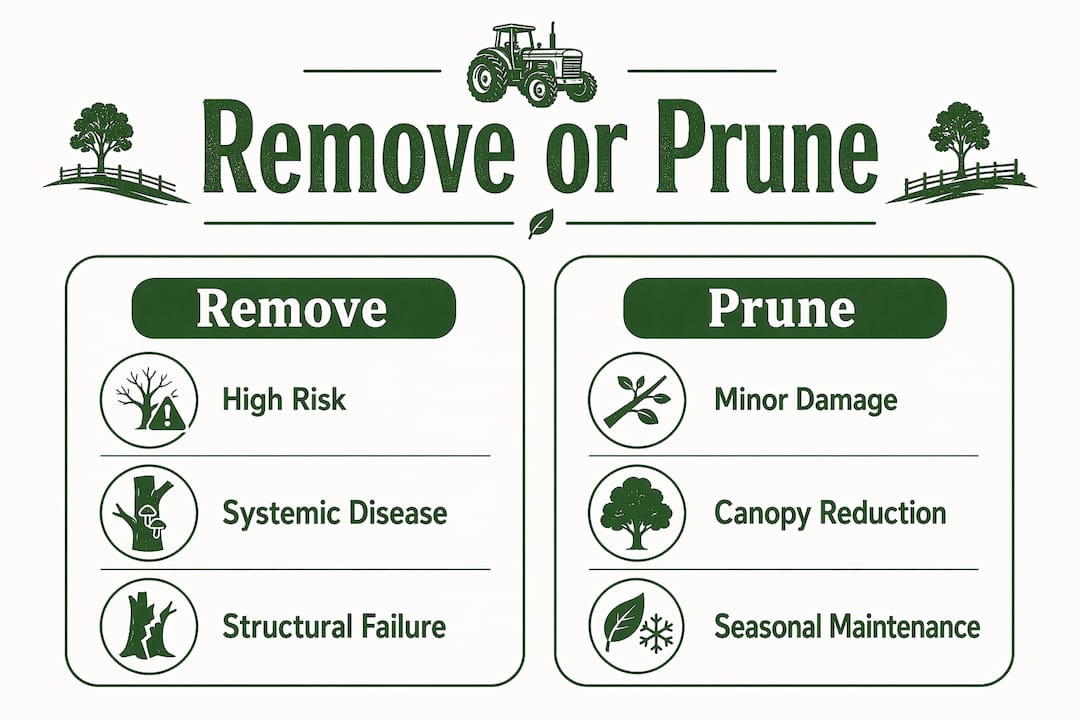
Tree removal is the correct choice when pruning cannot eliminate the safety risk or restore the tree to a stable, healthy condition. The industry standard for this decision comes from the International Society of Arboriculture (ISA), which defines removal as appropriate when both failure likelihood and consequence are high. That combination, not just one factor alone, is what triggers removal over pruning.
Several conditions meet that threshold in Charleston’s residential properties:
- Extensive trunk decay or hollow cavities. A tree with a large internal cavity has lost the structural wood that keeps it standing. Pruning removes branches but cannot restore a compromised trunk.
- Widespread fungal infection. Severe fungal decay at the root collar or throughout the trunk signals that the tree’s structural integrity is already compromised. Pruning is ineffective at this stage.
- Significant lean toward a structure. A tree leaning more than 15 degrees toward your home, a power line, or a neighboring property represents an active hazard that pruning cannot correct.
- Root failure. Heaving soil, exposed roots, or a tree that has shifted after a storm indicate the root system can no longer anchor the tree safely.
- Retrenchment phase decline. Overmature trees showing limb drop, progressive leaf loss, and increasing decay are in a natural decline cycle. Regular pruning can slow this but rarely reverses it in trees already far into decline.
- Major post-storm structural damage. After storm damage, trees with split trunks, shattered crowns, or uprooted root plates need removal, not pruning. Minor branch breakage is a different situation covered later in this guide.
Pro Tip: After a hurricane or tropical storm passes through the Charleston area, do not attempt to assess a damaged tree yourself if it is within striking distance of your home. Call a certified arborist before touching anything. A tree that looks stable may have compromised roots that are not visible from the ground.
How do Charleston’s permit rules affect your removal decision?
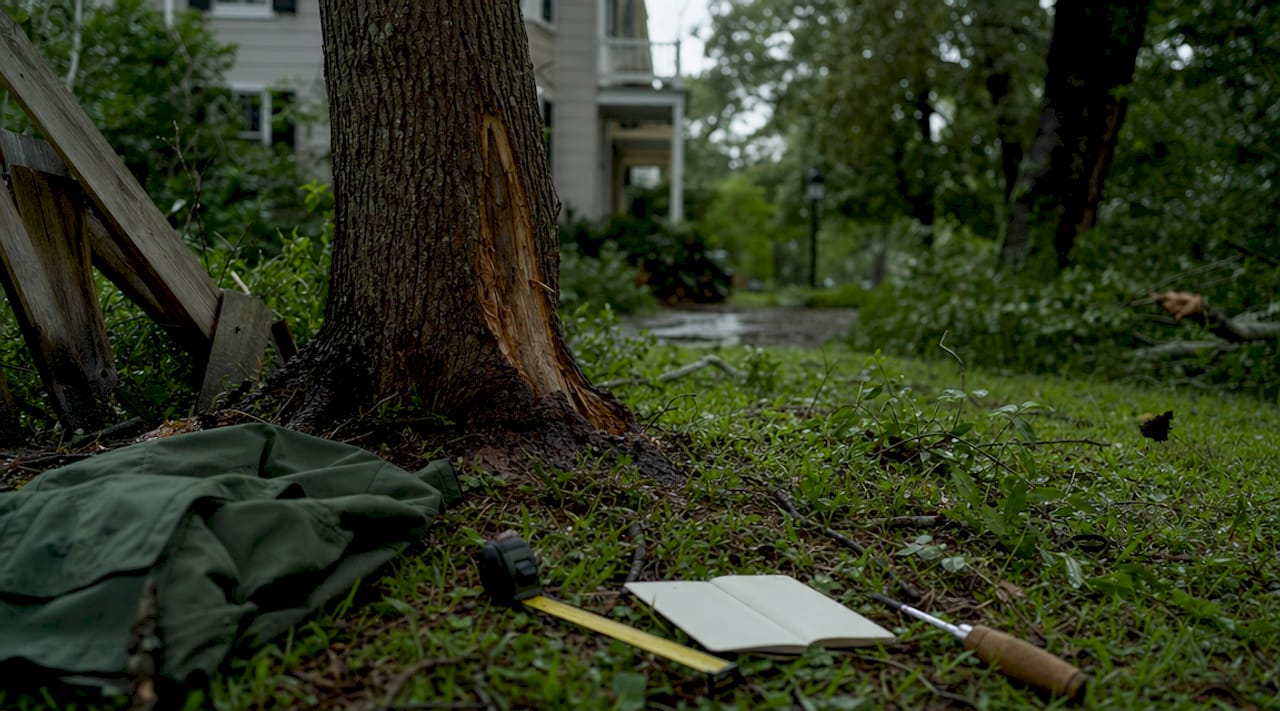
Charleston’s regulatory framework adds a layer to the removal decision that most homeowners do not anticipate. Charleston’s Tree Ordinance protects trees with an 8-inch caliper or greater within the historic district, requiring formal approval before any trimming or removal takes place. This is not a minor procedural step. It directly affects your timeline and options.
Here is a summary of the key regulatory requirements:
| Situation | Requirement |
|---|---|
| Tree 8 inches or greater in caliper, historic district | Board of Architectural Review (BAR) approval required before removal |
| Hazardous or dead tree removal | Documentation of hazard condition required; replacement planting typically mandated |
| Work affecting public right-of-way | City permit required regardless of tree size |
| Routine trimming, private property outside historic district | Generally permitted without review |
| Unauthorized removal of protected tree | Fines and required restoration apply |
Replacement planting is often required after removal on development sites, and the city may require trees of similar size or multiple smaller specimens to offset the loss. This obligation affects your total project cost and planning timeline. Charleston’s permitting rules introduce what arborists call a “process decision” dimension, meaning the legal framework shapes your choices beyond what the tree’s condition alone would dictate.
Pro Tip: Before contacting any tree service, verify whether your property falls within Charleston’s historic district boundaries. The City of Charleston’s GIS mapping tool lets you check your parcel in minutes. Skipping this step can result in fines that far exceed the cost of the removal itself.
When is pruning a viable alternative, and what are its limits?
Pruning is the right choice when the tree’s structural core is sound and the risk can be reduced by removing specific branches or sections of the canopy. A certified arborist can use professional pruning services to address weak branch attachments, co-dominant stems, and minor storm damage without compromising the tree’s long-term health.
Situations where pruning genuinely reduces risk include:
- Removing branches with weak V-shaped crotches that are likely to split under wind load
- Clearing branches that overhang rooflines or touch power lines without threatening the trunk
- Addressing minor storm breakage where less than 30% of the canopy is affected
- Reducing crown weight on a tree with a slight lean that does not yet meet removal thresholds
Pruning has hard limits, though. Removing more than 25% of the canopy in a single season increases the tree’s susceptibility to disease and structural decline. This is called over-pruning, and it is one of the most common mistakes Charleston homeowners make when trying to manage a tree they are not ready to remove. Timing matters as well. In the Charleston region, late winter to early spring is the recommended pruning window because trees are dormant, wounds close faster, and insect activity is low.
Pruning is not a substitute for removal when the disease is systemic, the trunk is structurally compromised, or the tree’s root system has failed. Attempting to prune a tree in that condition delays an inevitable removal while the risk to your property grows.
How to get a professional tree health assessment in Charleston
A tree health and risk assessment is the most reliable way to determine whether removal or pruning is the correct course of action. The ISA’s risk assessment framework combines two variables: the probability of failure and the consequence of that failure. A tree near an empty lot scores differently than the same tree next to a bedroom wall, even if the defects are identical. This is why the same visible defects can lead to different recommendations depending on what is in the tree’s fall zone.
Here is what to expect from a professional assessment process:
- Initial site inspection. The arborist examines the tree’s crown, trunk, root collar, and surrounding soil for visible defects, decay, and signs of disease.
- Defect documentation. Findings are recorded, including cavity size, lean angle, root condition, and any fungal fruiting bodies present at the base.
- Risk matrix scoring. The arborist assigns probability and consequence ratings using the ISA matrix to produce a risk priority level: low, moderate, high, or extreme.
- Written report. A formal assessment report documents findings, assigns a risk level, and recommends either pruning, cabling, monitoring, or removal.
- Permit support. For trees in Charleston’s historic district, the arborist’s report serves as the documentation required by the Board of Architectural Review to support a removal application.
Homeowners should obtain assessments especially after storms or when an insurance claim is involved. Many insurers require a certified arborist’s report before approving a claim for tree-related property damage. Scheduling an assessment immediately after a storm, before any cleanup work begins, preserves the documentation you may need later.
What steps should you take after deciding on tree removal?
Once you have determined that removal is necessary, a clear sequence of steps protects you legally and financially.
- Confirm your location and permit status. Check whether your property is in Charleston’s historic district and whether the tree meets the 8-inch caliper threshold. Contact the City of Charleston’s Department of Planning, Preservation, and Sustainability if you are unsure.
- Gather your documentation. If the tree is hazardous or dead, compile the arborist’s assessment report and any photographs of the damage. This documentation supports your permit application and any insurance claim.
- Obtain multiple quotes. Contact at least two or three licensed tree removal services in Charleston. Quotes should specify whether stump removal is included, what debris disposal covers, and whether the contractor handles permit applications on your behalf.
- Plan for stump grinding. A removed tree leaves a stump that can harbor pests and create a tripping hazard. Stump grinding eliminates the root mass and prepares the ground for replanting or landscaping.
- Plan for replacement planting. If the city requires replacement trees, factor this into your budget and timeline. Choosing a native species suited to Charleston’s climate, such as live oak or bald cypress, reduces long-term maintenance needs.
- Confirm safety protocols. Verify that the contractor carries liability insurance and will establish a clear work zone before beginning removal. Trees near structures or power lines require coordination with utility companies before work starts.
Key takeaways
Tree removal in Charleston is the correct decision when structural failure risk is high, disease is systemic, or local ordinances require it, and no amount of pruning can change that outcome.
| Point | Details |
|---|---|
| Removal triggers are structural, not cosmetic | Trunk decay, root failure, and major storm damage require removal, not pruning. |
| Charleston’s historic district adds a legal layer | Trees 8 inches or greater in caliper require Board of Architectural Review approval before removal. |
| Pruning has a 25% canopy limit | Removing more than 25% of canopy in one season damages tree health and increases disease risk. |
| ISA risk assessment drives the decision | Arborists combine failure probability and consequence to assign a risk level that determines the correct action. |
| Post-removal steps include permits, stump grinding, and replanting | Replacement planting is often legally required and should be budgeted alongside removal costs. |
What I’ve learned about the remove-or-prune decision in Charleston
After working with Charleston homeowners across the Lowcountry, the most consistent mistake I see is treating this as a purely visual judgment. Homeowners look at a tree, see green leaves, and assume it is healthy. But a tree can be fully leafed out in spring and have a trunk that is 40% hollow at the base. The leaves are the last thing to reflect what is happening structurally.
The second mistake is waiting. A tree that scores “moderate risk” on an ISA assessment today will score “high risk” after the next storm season. Charleston’s hurricane exposure means that a tree with any structural compromise is one major weather event away from becoming an emergency removal, which costs significantly more and carries far greater property risk than a planned removal.
The permit process in Charleston’s historic district genuinely surprises people. Homeowners assume that because a tree is on their private property, they have full authority over it. That is not the case for protected specimens. I have seen homeowners face restoration requirements after removing a tree without the proper Board of Architectural Review approval, and the cost of that compliance far exceeded what the permit process would have cost upfront.
My honest advice: get the assessment first, check your permit status second, and then make the decision. Skipping either step creates problems that are entirely avoidable.
— SEO
Tree removal and pruning services in Charleston from Salvationlandmanagement
Salvationlandmanagement provides professional tree removal in Charleston and pruning services for residential and commercial properties across the Lowcountry. The team is experienced with Charleston’s historic district permit requirements and can support the documentation process from assessment through Board of Architectural Review submission.
Whether you need a post-storm risk assessment, a full removal with stump grinding, or targeted pruning to reduce canopy risk, Salvationlandmanagement handles projects safely, on schedule, and within budget. The company also offers land clearing services for larger properties requiring more than single-tree work. Contact Salvationlandmanagement directly for a site inspection and quote tailored to your property’s specific conditions.
FAQ
What are the main signs a tree needs removal, not pruning?
The primary signs are trunk decay, large internal cavities, root failure, a significant lean toward a structure, and systemic fungal disease. Pruning is ineffective when the tree’s structural core is compromised.
Do I need a permit to remove a tree in Charleston?
Yes, if the tree is 8 inches or greater in caliper and located within Charleston’s historic district, you need Board of Architectural Review approval before removal. Work affecting a public right-of-way also requires a city permit regardless of tree size.
When is the best time to prune trees in Charleston?
Late winter to early spring is the recommended pruning window for Charleston-area trees. Trees are dormant during this period, wounds close more efficiently, and the risk of insect infestation is lower than in summer months.
How much of a tree can be pruned without damaging it?
Removing more than 25% of the canopy in a single season stresses the tree and increases its vulnerability to disease and decline. A certified arborist can identify which branches to remove while staying within safe limits.
What happens if I remove a protected tree without a permit in Charleston?
Unauthorized removal of a protected tree can result in fines and a requirement to restore or replace the tree at your expense. Verifying permit requirements before any work begins is the most cost-effective approach.