
Overgrown oak trees on James Island are a direct threat to property safety, tree health, and long-term property value when left without professional pruning. The combination of James Island’s coastal humidity, storm exposure, and local regulations around protected Grand Trees makes expert crown management a necessity, not a luxury. This article covers the health benefits of proper pruning, the safety risks of neglected oaks, correct techniques and timing, aesthetic improvements, and why hiring a certified arborist protects your investment.
Why overgrown oaks on James Island need professional pruning
Professional pruning, known in the arborist industry as crown management, is the structured removal of specific branches to improve a tree’s structure, health, and safety. For James Island homeowners, overgrown oak trees present a specific set of challenges rooted in the region’s climate, soil conditions, and regulatory environment. Clemson Extension confirms that maintaining oak vigor through proper cultural care, including pruning, is the primary defense against disease and insect problems. A well-pruned oak resists stress better, recovers from wounds faster, and requires fewer chemical interventions over its lifetime.
James Island’s warm, humid conditions accelerate fungal growth and create ideal conditions for oak wilt and other pathogens. Overgrown canopies trap moisture, reduce airflow, and create dense shading that weakens interior branches. Without regular crown management, these conditions compound year after year until a single storm or disease outbreak causes catastrophic damage.
How does professional pruning maintain and improve oak tree health?
A healthy oak tree defends itself through compartmentalization, a process where the tree walls off damaged or diseased tissue to prevent spread. Pruning supports this process when cuts are made correctly, but undermines it when cuts are poorly placed or timed.
Key health benefits of professional pruning include:
- Improved airflow and light penetration through the canopy, reducing fungal disease pressure
- Removal of diseased, dead, or crossing branches before decay spreads to healthy wood
- Reduction of pest habitat by eliminating deadwood where wood-boring beetles establish colonies
- Stimulation of healthy new growth through properly placed thinning cuts
Timing is one of the most critical factors for oak health on James Island. Pruning between November and February minimizes oak wilt risk because the sap-feeding beetles that spread the fungus are inactive during those cooler months. Pruning outside this window, particularly in spring and early summer, exposes fresh wounds to active beetle populations and dramatically increases infection risk.
Pro Tip: If you must prune outside the November to February window due to storm damage or hazard removal, apply a wound sealant to fresh cuts immediately. This reduces beetle attraction to the sap and lowers oak wilt transmission risk.
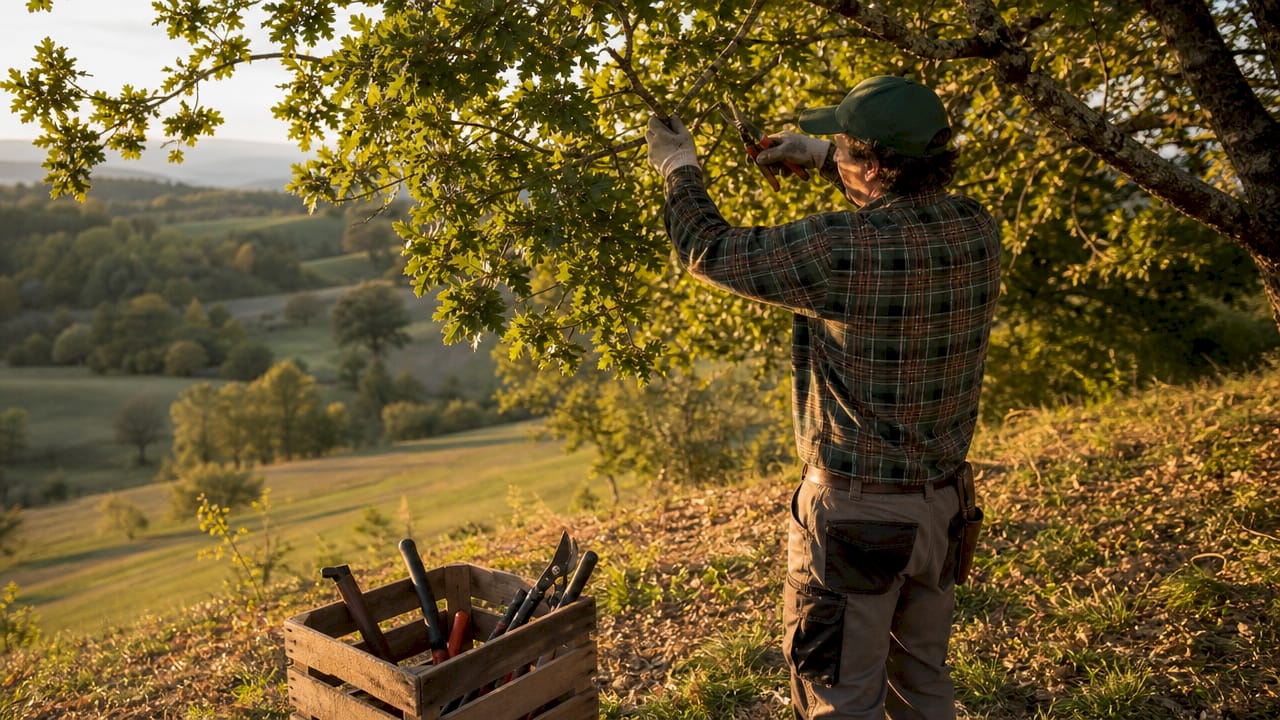
The University of Georgia CAES describes pruning as both an art and a science, requiring knowledge of how each cut type affects future growth. Thinning cuts, which remove a branch back to its point of origin, maintain the tree’s natural form and do not trigger the dense, weak regrowth that heading cuts produce. Heading cuts, which shorten branches to a stub, cause clusters of fast-growing water sprouts that are structurally weak and visually unappealing.
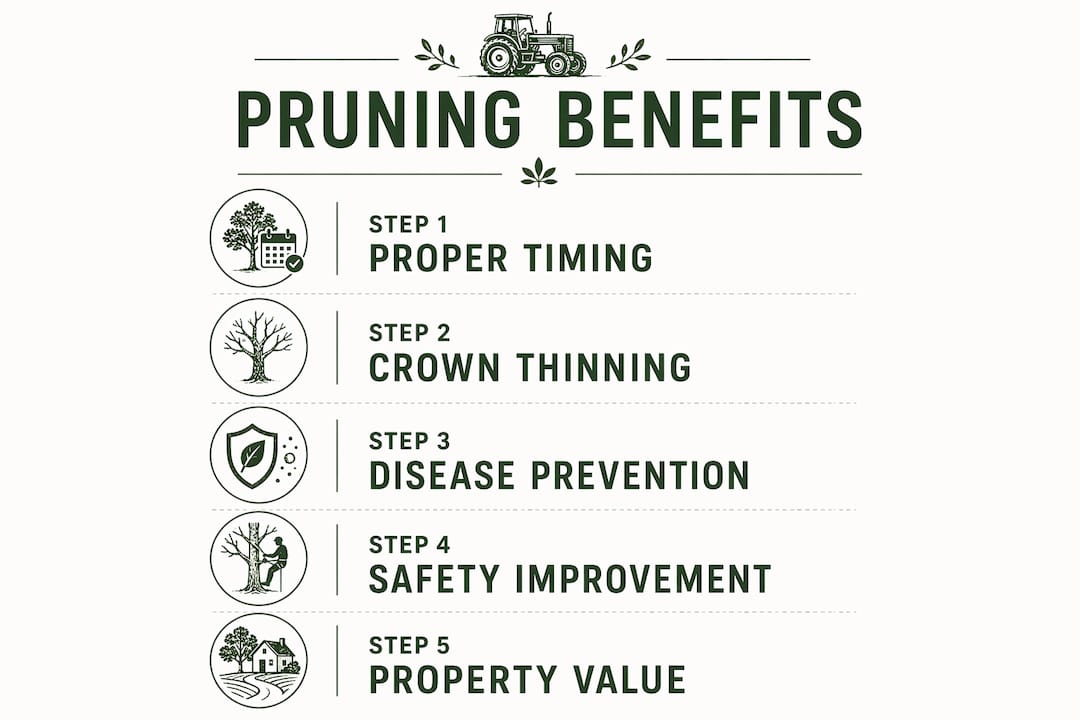
What safety risks do overgrown oak trees pose?
Overgrown oaks on James Island carry real structural risks that increase with every season of neglect. Branches that extend over rooftops, driveways, or power lines become hazards during the Atlantic hurricane season, which runs June through November.
The structural risks break down into three categories:
- Branch failure from internal decay: Improper cuts that damage the branch collar trigger internal decay columns that weaken branch attachments over years, often invisibly until failure occurs.
- Storm-related limb loss: Overgrown canopies catch significantly more wind load. Reducing crown density through professional thinning lowers the mechanical stress on branch unions during high-wind events.
- Obstruction hazards: Branches encroaching on walkways, fences, or utility lines create liability risks for homeowners and can trigger code enforcement notices.
Professional arborists follow ANSI A300 pruning standards, which specify exact cut placement relative to the branch collar and branch bark ridge. These standards exist because cuts made even a few inches in the wrong location can initiate decay columns that compromise structural integrity years later.
Heavy canopy removal in a single session stresses the tree by disrupting its energy allocation. Arborists sequence pruning across multiple sessions when significant crown reduction is needed, allowing the tree to stabilize between cuts. This approach reduces the risk of post-pruning decline, a condition where a heavily pruned tree produces excessive, weak regrowth as a stress response.
For James Island homeowners near tidal areas or with oaks that have grown over structures, the risk calculus is straightforward. A mature live oak branch can weigh several hundred pounds. Professional pruning before a storm is far less costly than emergency tree removal and roof repair after one.
What are proper pruning techniques and timing for James Island oaks?
Understanding the difference between beneficial and harmful pruning methods helps you evaluate the quality of any tree service you hire. The table below outlines the main approaches:
| Technique | Description | Effect on tree |
|---|---|---|
| Thinning | Removes branches at their point of origin | Maintains natural form, improves airflow |
| Crown lifting | Removes lower branches to raise canopy base | Clears walkways and structures below |
| Deadwood removal | Removes dead, dying, or diseased branches | Reduces decay spread and pest habitat |
| Topping | Cuts main branches to stubs | Causes severe stress, decay, and weak regrowth |
| Heading | Shortens branches mid-span | Triggers dense, structurally weak water sprouts |
Topping and heading are the two techniques that cause the most long-term damage to mature oaks. Despite being common among unqualified tree services, both practices are condemned by the University of Georgia CAES and the International Society of Arboriculture. A topped oak typically requires more corrective work within five years than it would have needed with proper maintenance from the start.
The Royal Horticultural Society advises removing no more than 20% of the canopy in any single year. Exceeding this threshold triggers vigorous, counterproductive regrowth and places the tree under significant physiological stress. For large, overgrown oaks, this means a multi-year pruning program rather than a single aggressive session.
James Island falls under Charleston’s municipal tree ordinances. Grand Trees, defined as oaks over 24 inches in diameter, carry special protections. Pruning these trees does not require a permit, but the work must be performed by qualified professionals and must not exceed canopy removal limits. Hiring an uncertified crew for a Grand Tree can expose you to fines and liability.
Pro Tip: Before hiring any tree service on James Island, ask for proof of ISA (International Society of Arboriculture) certification and current liability insurance. Certified arborists are trained in ANSI A300 standards and understand local Grand Tree regulations.
How does professional pruning enhance aesthetics and property value?
A well-maintained oak tree adds measurable curb appeal and contributes to neighborhood character. Overgrown oaks, by contrast, create visual clutter, block natural light from windows, and can make a property feel neglected.
Professional pruning delivers several aesthetic and long-term value benefits:
- Restored natural form: Thinning cuts preserve the oak’s characteristic spreading canopy without the dense, unnatural appearance that heading cuts produce.
- Reduced water sprout growth: Correct pruning technique minimizes the stress-triggered water sprouts that create a messy, brushy appearance around the crown.
- Extended tree lifespan: Structural maintenance performed over decades keeps mature oaks sound and standing, preserving the significant property value that a large, healthy specimen tree represents.
- Improved light and views: Crown lifting and selective thinning open up sightlines and allow more natural light into the home and garden below.
Mature live oaks are one of the defining landscape features of the Charleston Lowcountry. Preserving them through consistent, expert care protects both their ecological value and the character of your property. Reviewing pruning timing guidance for the Johns Island area gives James Island homeowners a clear picture of how seasonal scheduling affects long-term tree appearance.
Why hire a professional arborist for overgrown oak trees?
DIY pruning on mature oaks carries risks that go beyond the physical danger of working at height. Incorrect cuts made with good intentions can initiate decay that compromises the tree’s structure over the following decade.
Reasons to hire a certified professional include:
- ANSI A300 compliance: Certified arborists make cuts that protect the branch collar and branch bark ridge, preventing the internal decay that leads to structural failure.
- Equipment appropriate for large oaks: Mature live oaks require rigging systems, aerial lifts, and specialized saws that homeowners do not typically have access to.
- Knowledge of local regulations: Professionals familiar with Charleston’s Grand Tree ordinances handle permit questions and canopy removal limits correctly.
- Sequenced pruning plans: Experienced arborists assess the full tree before cutting, identifying which branches to remove first to maintain balance and minimize stress.
- Liability protection: Licensed and insured crews protect you from financial exposure if equipment or falling limbs cause property damage during the job.
Pro Tip: Ask your arborist for a written pruning plan before work begins. A reputable professional will specify which branches are targeted, the technique used for each, and the total estimated canopy removal percentage.
Understanding when to remove versus prune a tree is also part of what a certified arborist brings to the assessment. Some overgrown oaks have structural defects that make pruning insufficient, and a professional evaluation identifies those cases before they become emergencies.
Key takeaways
Professional pruning is the most cost-effective way to protect overgrown oak trees on James Island from disease, storm damage, and structural failure while preserving their long-term property value.
| Point | Details |
|---|---|
| Prune November through February | Avoiding active beetle season reduces oak wilt infection risk significantly. |
| Never remove more than 20% of canopy per year | Exceeding this threshold triggers stress regrowth and weakens tree stability. |
| Use thinning cuts, not heading cuts | Thinning preserves natural form; heading causes dense, structurally weak sprouts. |
| Grand Trees require qualified professionals | Charleston oaks over 24 inches in diameter carry legal protections and removal limits. |
| Improper cuts cause long-term decay | Damage to the branch collar initiates internal decay columns that appear years later. |
What working with coastal oaks has taught me about pruning timing
Most homeowners contact a tree service after something goes wrong: a branch falls, a storm reveals a weak union, or a neighbor complains about encroachment. In my experience observing tree care across coastal South Carolina communities, the pattern is consistent. The trees that fail are almost never the ones that received regular, professional attention. They are the ones that were either ignored for years or, worse, topped by an unqualified crew that charged half the going rate.
The oak wilt timing issue is the one I see misunderstood most often. Homeowners assume that pruning in spring, when the tree looks most vigorous, is the right call. The opposite is true. That is exactly when beetle activity peaks and fresh pruning wounds are most attractive to the insects that carry the fungus. The November to February window feels counterintuitive, but it is the single most protective decision a James Island homeowner can make for a mature oak.
The other misconception I encounter regularly is that aggressive pruning solves overgrowth faster. Removing more than 20% of a canopy in one session does not accelerate the process. It triggers a stress response that produces more weak growth within two seasons, leaving the homeowner in a worse position than before. Gradual, sequenced pruning over two or three years produces a structurally sound, well-formed tree. Patience in this context is not passive. It is the correct technical approach.
— SEO
How Salvationlandmanagement supports James Island homeowners
Salvationlandmanagement provides professional tree pruning and land management services specifically for James Island and the broader Charleston Lowcountry. Their team understands the local ecology, Grand Tree regulations, and the seasonal timing requirements that protect mature oaks from disease and storm damage. Whether you are managing a single overgrown specimen or a property with multiple mature trees, Salvationlandmanagement brings the equipment, certifications, and regional knowledge to handle the work correctly. Visit their James Island services page to request a consultation or get a project quote. For homeowners considering whether a tree needs pruning or full removal, their professional tree pruning services page outlines the full scope of what they offer.
FAQ
When is the best time to prune oak trees on James Island?
The best time to prune oak trees on James Island is November through February. Pruning during this window avoids the active season of sap-feeding beetles that spread oak wilt fungus from March through October.
How much of an oak tree can be pruned at one time?
No more than 20% of the canopy should be removed in any single year. Removing more triggers vigorous, structurally weak regrowth and places the tree under significant physiological stress.
Do James Island homeowners need a permit to prune oak trees?
Pruning Grand Trees, those over 24 inches in diameter, does not require a permit under Charleston’s ordinances. However, the work must be performed by qualified professionals and must stay within canopy removal limits.
What is the difference between thinning and topping an oak tree?
Thinning removes branches at their point of origin to maintain the tree’s natural form and improve airflow. Topping cuts main branches to stubs, causing severe stress, internal decay, and dense regrowth that weakens the tree’s structure.
Why should I hire a certified arborist instead of a general tree service?
Certified arborists follow ANSI A300 pruning standards, which protect the branch collar and prevent the internal decay that leads to structural failure years later. They also understand Charleston’s Grand Tree regulations and carry the liability insurance that protects you during the job.