
Selective clearing is defined as the targeted removal of unwanted vegetation while actively protecting trees you want to keep, and it is the correct method for clearing overgrown property on James Island without damaging valuable trees. James Island’s local ordinances protect oak grand trees with a trunk diameter of 24 inches or greater at breast height, making compliance non-negotiable before any clearing work begins. The industry-standard approach combines Tree Protection Zones (TPZ), permit compliance, and tree-friendly clearing techniques such as forestry mulching to protect both the trees and the soil around them. Getting this right from the start saves you from costly fines, replacement requirements, and long-term tree loss.
How to clear overgrown property on James Island without damaging valuable trees
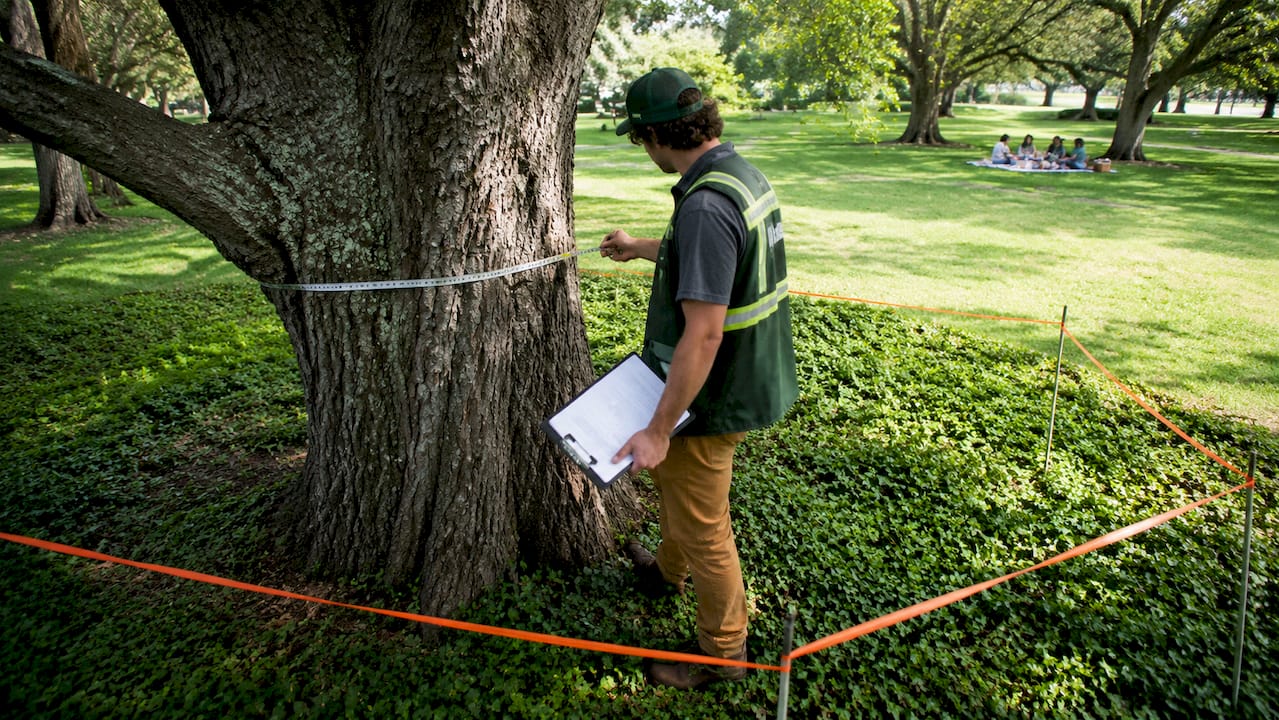
Selective clearing requires upfront evaluation and mapping of every tree worth saving before a single branch is cut or a machine enters the property. This means walking the property with a tape measure, identifying trees by species and trunk diameter, and marking them clearly before work begins. Skipping this step is the most common mistake James Island homeowners make, and it leads to accidental damage that is both expensive and irreversible.
James Island’s ecological context makes this especially important. The area’s mature live oaks, loblolly pines, and coastal hardwoods contribute directly to property value and neighborhood character. A mixed clearing approach that balances usability with preservation is not just good practice. It is the only approach that holds up legally and ecologically on this island.
What are James Island’s tree protection regulations?
James Island enforces specific rules that directly affect how you clear overgrown land. Understanding them before you start protects you from penalties that can far exceed the cost of the clearing job itself.
The key regulations every homeowner needs to know:
- Grand tree definition: Any oak with a trunk diameter of 24 inches or greater at breast height (DBH) is classified as a grand tree and is legally protected from cutting or damage without a permit.
- Pruning limits: Removing more than 3 limbs measuring 6 inches or greater in diameter, or removing more than 25% of the canopy, counts as damage under the ordinance and requires a permit.
- Permit process: A permit costs $25 but requires an appearance before the Board of Zoning Appeals. Approval is not guaranteed.
- Replacement requirements: If removal is approved, mitigation is required on an inch-for-inch basis. Removing a 36-inch grand tree requires planting 18 two-inch replacement trees, which costs approximately $2,700 or more depending on the replacement tree size selected.
- Exceptions and proposals: Regulatory proposals have been discussed to adjust thresholds, but as of 2026 the core grand tree protections remain in effect. Always verify current rules with the Town of James Island before starting work.
Over-pruning is a frequently overlooked violation. Many homeowners assume that trimming back branches is harmless, but excessive pruning counts as damage under the ordinance. If you are unsure whether planned pruning crosses the legal threshold, consult a certified arborist before picking up a chainsaw.
How to protect valuable trees during property clearing
Physical protection of retained trees is the most critical step in any clearing project. Tree death near development is most commonly caused by preventable issues: soil compaction, grade changes, and root severance. All three can happen even during light clearing work if no protection measures are in place.
The standard protection method is establishing a Tree Protection Zone around each tree you intend to keep. The TPZ is a fenced buffer area calculated at roughly 1 foot of radius per inch of trunk diameter. A 20-inch tree, for example, gets a 20-foot protection radius. Inside that zone, the following rules apply without exception:
- Install physical fencing and post clear signage before any equipment or workers enter the property.
- Apply a 3-inch mulch layer across the entire TPZ floor to reduce compaction from any incidental foot traffic.
- Prohibit all trenching, digging, and vehicle traffic inside the TPZ throughout the entire project.
- Plan all equipment access routes before work begins so machinery never needs to cross a TPZ.
- Limit pruning to what is necessary for clearance, staying well within the 25% canopy limit.
Pro Tip: Soil compaction from foot traffic alone inside a TPZ can damage feeder roots and cause gradual tree decline over 2 to 3 years. The damage is not visible immediately, which is why many homeowners do not connect the clearing project to the tree death that follows. Enforce the TPZ boundary strictly, even for workers on foot.
Involving an ISA (International Society of Arboriculture) certified arborist in the planning phase adds a layer of protection that no amount of fencing alone can provide. An arborist can identify stress signs before clearing begins, recommend specific TPZ sizes for each tree, and document tree condition to protect you legally if a dispute arises later.
What clearing methods minimize damage to trees and soil?
The method you choose for removing unwanted vegetation has a direct effect on soil health, root systems, and the long-term condition of trees you want to keep. Not all clearing methods are equal, and the differences matter significantly on James Island properties.
Forestry mulching vs. traditional clearing
| Method | Soil disturbance | Ground cover result | Best for |
|---|---|---|---|
| Forestry mulching | Low | Mulch layer left in place | Overgrown lots with trees to preserve |
| Cut and grind | Moderate | Stumps removed, bare soil | Targeted stump removal |
| Dozing or grubbing | High | Topsoil often removed | Full site preparation only |
Forestry mulching is the most effective method for clearing overgrown property while preserving topsoil and reducing erosion risk. It grinds unwanted vegetation in place, leaving a beneficial mulch layer that stabilizes the soil and suppresses regrowth. Costs range from $400 to $2,500 per acre depending on vegetation density. That cost is offset by the fact that no debris hauling is required and the ground cover left behind actively protects the soil around retained trees.
Pro Tip: Request that the mulching operator work outward from protected trees rather than inward. This keeps the heaviest machine passes as far from root zones as possible and gives you a clear visual record of where the TPZ boundaries are during the job.
Step-by-step clearing sequence for James Island properties
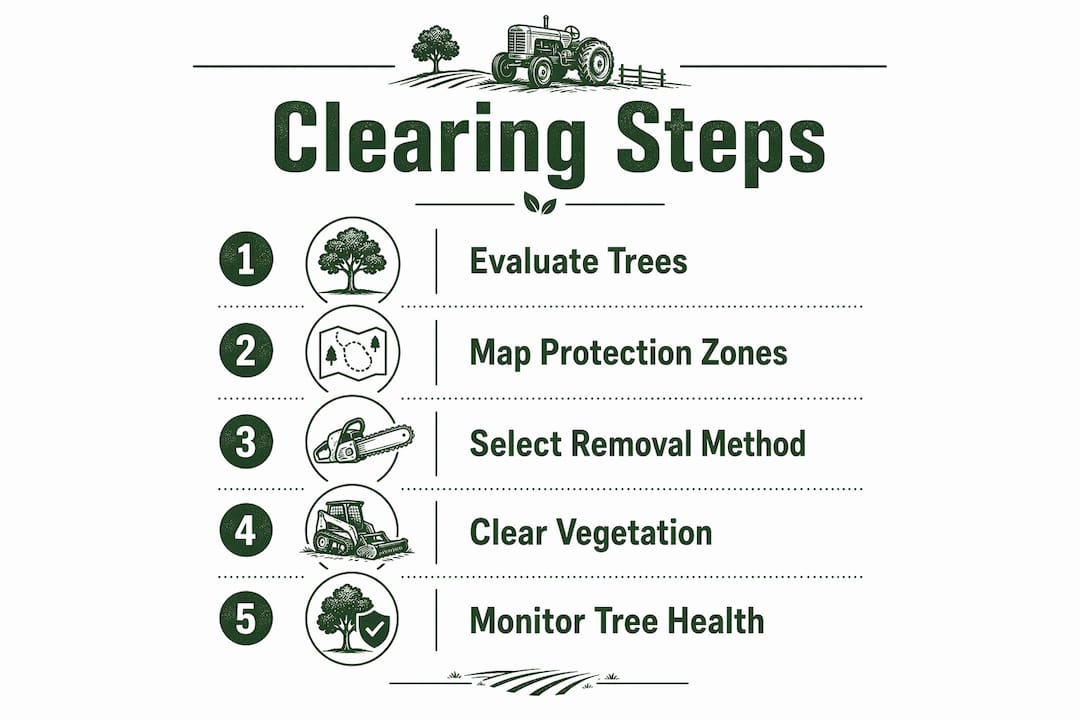
- Walk the property and mark every tree to be preserved with flagging tape or paint.
- Establish and fence all TPZs before any equipment arrives on site.
- Plan and mark equipment access routes that avoid all TPZs and root zones.
- Remove invasive vines and brush by hand inside and immediately adjacent to TPZs.
- Use forestry mulching for the bulk of the overgrown vegetation in open areas.
- Address stumps and larger woody debris last, working away from protected trees.
- Install erosion controls such as silt fencing and spread mulch on bare soil immediately after clearing.
Bare soil erodes quickly after clearing, and that erosion carries away the topsoil that tree roots depend on. Erosion control is not a finishing touch. It is a required step that protects both the landscape and the trees you worked to preserve.
What permits are needed near wetlands and coastal areas on James Island?
James Island properties near tidal creeks, marshes, and the waterfront face an additional layer of permitting requirements that go beyond local tree ordinances. The coastal critical line defines the boundary of sensitive areas regulated by South Carolina’s Office of Coastal Resource Management (OCRM). Any clearing or construction work that crosses into this zone requires an OCRM permit before work begins.
Key points for properties near water:
- Work within the coastal critical area without a permit can result in enforcement actions including fines and mandatory removal of any unpermitted changes.
- The U.S. Army Corps of Engineers 2026 Nationwide Permits regulate minimal-impact work near wetlands and waters of the U.S. These permits were reissued in 2026 and are valid through 2031, but project-specific conditions still apply.
- Clearing that involves filling, grading, or vegetation removal within jurisdictional wetlands requires coordination with both OCRM and the Corps of Engineers.
- Unpermitted work near waterways is significantly harder and more expensive to correct after the fact than obtaining the permit upfront.
If your property includes any drainage ditches, low-lying areas, or proximity to tidal water, consult with a land management professional familiar with Charleston waterfront permitting before scheduling any clearing work. You can also review land clearing vs. forestry mulching options to understand which approach fits your site conditions and regulatory requirements.
Post-clearing maintenance to protect tree health long-term
Clearing is not the end of the process. Trees that survive a clearing project still face stress from root disturbance, reduced canopy competition, and changed soil conditions. Post-clearing care determines whether those trees thrive or decline over the following years.
Follow these practices after clearing is complete:
- Water regularly: Watering every 1 to 2 weeks during the growing season supports root regeneration and helps trees recover from stress caused by nearby land disturbance.
- Monitor for stress signs: Watch for early warning signs including yellowing leaves, premature leaf drop, and dieback in the upper canopy. These often appear 6 to 18 months after clearing.
- Reseed and plant ground cover: Bare soil left after clearing should be reseeded or planted with low-growing ground cover as quickly as possible to control erosion and protect surface roots.
- Avoid additional impacts: Do not schedule construction, grading, or additional clearing near preserved trees within the first full growing season after the initial clearing.
- Schedule an arborist follow-up: A certified arborist check-in 6 months after clearing can catch early root stress and recommend corrective care before problems become irreversible.
Correcting soil compaction and root damage after clearing is far more difficult than preventing it in the first place. Prevention through planning is always the better investment.
Key takeaways
Clearing overgrown property on James Island without damaging valuable trees requires combining local ordinance compliance, physical tree protection zones, tree-friendly clearing methods, and consistent post-clearing care.
| Point | Details |
|---|---|
| Know the grand tree rules | Oaks 24 inches DBH or larger are protected; removal or excessive pruning requires a permit and mitigation. |
| Establish TPZs before work starts | Fence off 1 foot of radius per inch of trunk diameter and prohibit all traffic inside the zone. |
| Choose forestry mulching | This method leaves topsoil intact and provides ground cover that protects roots after clearing. |
| Permit coastal and wetland work | OCRM and Army Corps permits are required for clearing near the coastal critical line or wetlands. |
| Maintain trees post-clearing | Water every 1 to 2 weeks during the growing season and monitor for stress signs for at least one full year. |
What I have learned from watching James Island clearing projects go wrong
Most tree damage on James Island clearing projects does not happen because homeowners ignored the rules. It happens because they assumed the rules applied only to the obvious actions, like cutting down a tree. The subtler damage comes from a skid steer parked inside a root zone for two hours, a trench dug 15 feet from a trunk to run irrigation, or a crew trimming “just a few branches” that together exceed the 25% canopy threshold.
The grand tree ordinance exists for a reason. Those mature live oaks are not just beautiful. They are structural assets that stabilize soil, reduce stormwater runoff, and add measurable value to James Island properties. Losing one to an avoidable clearing mistake is a loss that cannot be undone in any reasonable timeframe.
My honest advice: treat the TPZ boundary as a hard line, not a guideline. Post the fencing before any person or machine touches the property. And if you are uncertain whether a tree qualifies as a grand tree, measure it before assuming it does not. The $25 permit fee is not the risk. The $2,700-plus in replacement trees, plus potential fines, is the risk.
Choosing a land management company that knows James Island’s specific regulations and ecological conditions is not a luxury. It is the most practical decision you can make for a project like this. Experience with local ordinances, wetland permitting, and tree-friendly equipment makes the difference between a clean result and a costly correction.
— SEO
How Salvationlandmanagement helps James Island homeowners clear land safely
Salvationlandmanagement provides land clearing and tree removal services specifically tailored for James Island properties, with direct experience navigating the area’s grand tree ordinances, coastal permitting requirements, and ecological sensitivities. The team uses selective clearing and forestry mulching to remove unwanted vegetation while protecting soil health and the trees you want to keep. Every project starts with a site evaluation that identifies protected trees, establishes TPZ boundaries, and maps equipment access routes before work begins. If your James Island property needs clearing done right, contact Salvationlandmanagement for a straightforward quote and a plan built around your specific site conditions and goals.
FAQ
What is a grand tree on James Island?
A grand tree on James Island is any oak with a trunk diameter of 24 inches or greater measured at breast height. Cutting, damaging, or excessively pruning a grand tree without a permit is illegal under local ordinance.
Do I need a permit to clear overgrown brush on James Island?
General brush clearing does not require a permit, but any work that damages or removes a grand tree does. Work near wetlands or the coastal critical line also requires OCRM and potentially Army Corps of Engineers permits.
What is a Tree Protection Zone and why does it matter?
A Tree Protection Zone is a fenced buffer around a tree calculated at 1 foot of radius per inch of trunk diameter. It prevents soil compaction, root damage, and grade changes that are the leading causes of tree death during land clearing.
Is forestry mulching better than traditional clearing for preserving trees?
Yes. Forestry mulching causes significantly less soil disturbance than dozing or grubbing, leaves a protective mulch layer in place, and allows operators to work precisely around trees without removing topsoil or damaging root zones.
How long after clearing should I monitor preserved trees for damage?
Monitor preserved trees for at least 12 to 18 months after clearing. Stress symptoms like canopy dieback and leaf yellowing often appear months after the root damage occurred, so early monitoring allows for corrective care before decline becomes irreversible.
Recommended
- Land Management Services James Island, SC | Salvation Land Management
- Why Overgrown Oak Trees on James Island Need Professional Pruning
- Land Clearing vs Forestry Mulching: Which Method is Right for Your Charleston Property? | Salvation Land Management
- Land Clearing & Tree Service Blog | Salvation Land Management