
Land clearing before selling property in Charleston is the process of removing trees, brush, and overgrown vegetation to increase usable acreage, improve buyer impressions, and raise appraised value while staying compliant with local permits. In real estate terms, this practice is called site preparation or pre-sale lot clearing. Charleston homeowners who clear strategically before listing see stronger buyer interest and fewer price negotiations. The city’s coastal environment, protected tree ordinances, and OCRM regulations make this process more involved than in most other South Carolina markets. Getting it right from the start protects your timeline and your sale price.
Land clearing before selling property in charleston: what you need to know first
Charleston requires permits to remove protected trees 8 inches DBH or larger on most residential parcels. DBH stands for diameter at breast height, measured at 4.5 feet above ground. Trees below that threshold are generally unregulated, but anything at or above 8 inches triggers a permit review. Grand Trees, a separate protected category, require Board of Zoning Appeals approval before removal. Mitigation is tied to replacement planting or payment into a city tree fund.
Unpermitted removal carries serious consequences. Fines run $100–$1,000 per inch DBH for unauthorized removal, and the city can issue stop-work orders that freeze your entire project. In some cases, violations escalate to criminal misdemeanor charges. These penalties can delay your listing by weeks and add unexpected costs that eat into your proceeds.
Waterfront properties face an additional layer of regulation. The OCRM coastal critical line defines the regulatory boundary for land disturbance near waterfronts, and crossing it without a state permit triggers DHEC review. Beachfront properties face the most restrictive rules. Homeowners near coastal zones often underestimate how the critical line limits clearing, which leads to permit violations that are expensive to resolve.
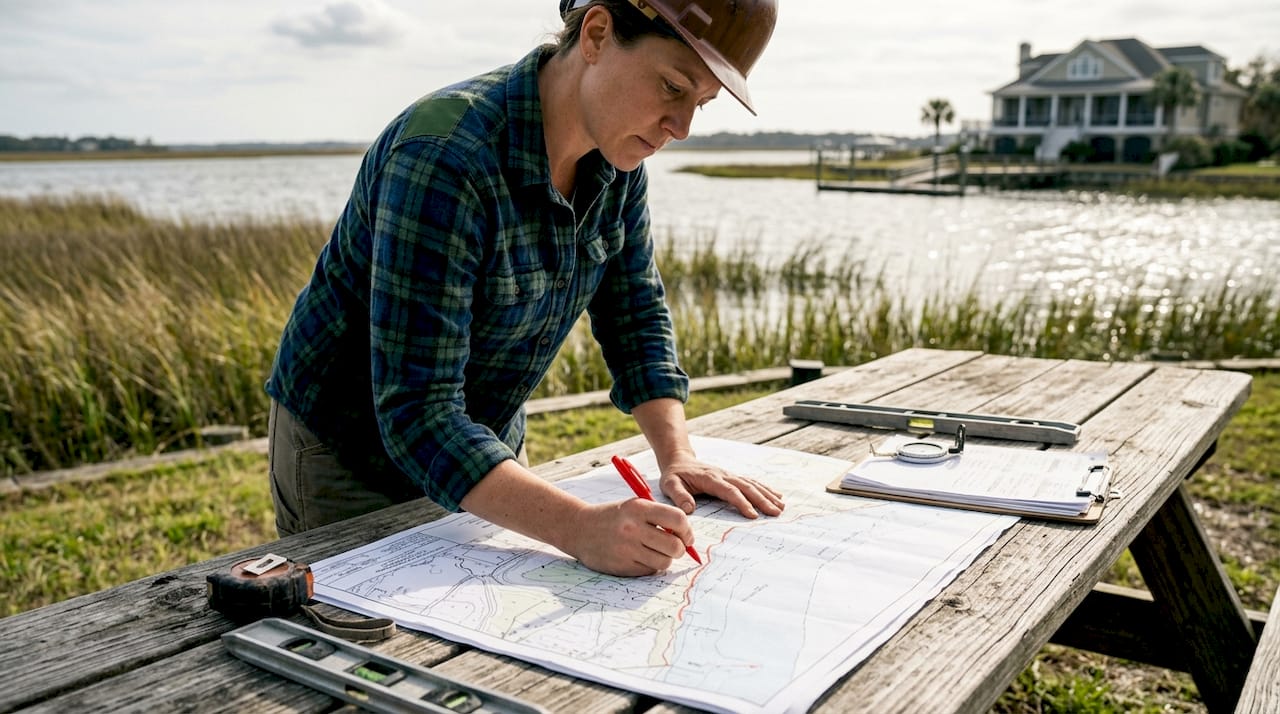
Pro Tip: Before scheduling any clearing work, pull your property survey and have a licensed contractor identify the OCRM critical line, protected tree zones, and limits of disturbance. Confirming these boundaries first prevents accidental violations that trigger costly permit requirements and erosion controls.
Here is a quick reference for Charleston’s key permitting thresholds:
| Regulation Type | Threshold or Trigger | Consequence of Violation |
|---|---|---|
| Protected Tree Removal | 8 inches DBH or larger | Fines $100–$1,000 per inch DBH, stop-work orders |
| Grand Tree Removal | BZA approval required | Mandatory replacement, possible misdemeanor |
| OCRM Coastal Critical Line | Any disturbance past the line | State permit required, project halt |
| Limits of Disturbance | Clearing beyond approved boundary | Expanded erosion controls, additional permits |
How much does land clearing cost in charleston?
Land clearing in Charleston typically costs $1,500–$5,000 per acre, with variation driven by vegetation density, terrain, and project complexity. That range is wide because a flat, lightly wooded lot costs far less to clear than a densely overgrown parcel with large hardwoods and wet soil. Understanding what drives your specific cost helps you budget accurately and evaluate contractor quotes.
The main factors that influence your total cost include:
- Acreage and scope: Larger parcels cost more in total but often less per acre due to equipment efficiency.
- Vegetation type and density: Heavy brush and mature trees require more time and specialized equipment than scrub growth.
- Terrain and soil conditions: Wet, low-lying areas common in the Charleston Lowcountry slow equipment and increase labor hours.
- Accessibility: Properties with limited road access require smaller or specialized equipment, which raises costs.
- Permit and mitigation fees: Tree replacement requirements or city mitigation fees add to the base clearing cost.
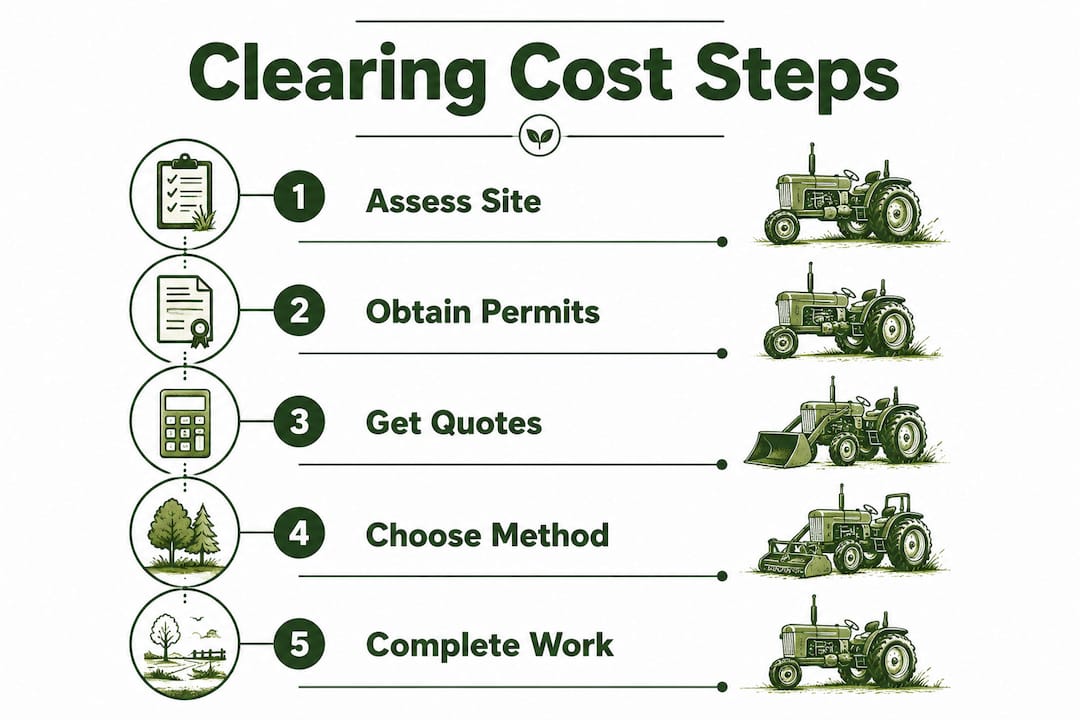
Different clearing methods also carry different price points. Traditional clearing with bulldozers and excavators is faster on large tracts but leaves bare soil that requires erosion control. Forestry mulching uses heavy machinery to grind brush and small trees into mulch in place, which costs more per hour but reduces debris hauling and soil disturbance. For pre-sale purposes, the right method depends on your property’s size, condition, and buyer presentation goals.
Pro Tip: Get at least three written quotes from licensed Charleston contractors. Lowball estimates often exclude permit fees, debris removal, or erosion control measures. A quote that covers all line items is worth more than the cheapest number on paper.
What are the best practices for pre-sale land clearing in charleston?
Clearing land strategically before selling improves first impressions and can increase property appraisal by enhancing usable acreage. The key word is “strategically.” Over-clearing without a landscaping plan increases erosion and reduces curb appeal. Preserving specimen trees and starting with access and views is the recognized best practice for pre-sale lot preparation.
Follow this sequence to get the most value from your clearing investment:
- Confirm your limits of disturbance. Knowing exact disturbance limits prevents accidental clearing into protected zones, which triggers costly permit and erosion control requirements.
- Clear for access and light first. Open sight lines from the road and clear paths to key features like water views, outbuildings, or usable flat areas. Buyers need to see the property’s potential immediately.
- Preserve protected and specimen trees. Large, healthy hardwoods add appraised value and visual appeal. Removing them without permits creates legal risk and often hurts buyer perception.
- Install erosion control immediately after clearing. Silt fences, straw wattles, or hydroseed applications protect bare soil from Charleston’s frequent rain events. Exposed soil signals neglect to buyers and inspectors.
- Pair clearing with a landscaping refresh. Exterior improvements like mulching, trimming, and power washing boost buyer perception and protect pricing momentum. Clearing alone is not enough if the remaining vegetation looks unkempt.
- Time your clearing to the listing schedule. Cleared land looks best 2–4 weeks after work is complete, once fresh growth softens bare areas and erosion controls settle in.
Strategic clearing combined with outdoor staging boosts perceived value and can accelerate sale timing in Charleston’s competitive market. Buyers form opinions within seconds of arriving at a property. A clean, accessible lot signals that the property has been well maintained and is ready to use.
Pro Tip: Ask your real estate agent to walk the property before clearing begins. Agents know what buyers in your price range prioritize, and their input can help you decide which areas to clear and which to leave natural.
Land clearing vs. forestry mulching: which method fits your sale goals?
Forestry mulching is an alternative to traditional clearing that grinds brush and small trees into mulch on-site using a single piece of heavy equipment. Traditional clearing uses bulldozers, skid steers, and debris hauling to remove all material from the site. Both methods serve different goals, and choosing the wrong one can cost you time and money before your listing goes live.
| Factor | Traditional Clearing | Forestry Mulching |
|---|---|---|
| Speed on large tracts | Fast | Moderate |
| Soil disturbance | High, requires erosion control | Low, mulch layer protects soil |
| Debris removal | Required, adds hauling cost | Not needed, mulch stays on site |
| Final appearance | Bare ground, needs landscaping | Natural mulched surface |
| Best for | Full lot development prep | Selective clearing, wooded lots |
| Cost per hour | Lower equipment rate | Higher rate, fewer follow-up costs |
For sellers, the choice comes down to your property type and buyer audience. A wooded lot being sold to a residential buyer benefits from forestry mulching services because the mulched surface looks natural and requires no additional landscaping. A large rural tract being marketed to developers or investors may be better served by traditional clearing that exposes the full footprint of usable land.
Properties near Charleston’s coastal areas benefit from forestry mulching’s lower soil disturbance profile. Bare soil near OCRM-regulated zones can trigger erosion control requirements that add cost and delay. Consulting with a licensed local contractor before choosing a method is the most reliable way to match the technique to your property’s specific conditions and sale goals.
Key takeaways
Pre-sale land clearing in Charleston requires balancing permit compliance, cost planning, and strategic presentation to maximize property value and buyer appeal.
| Point | Details |
|---|---|
| Permits are non-negotiable | Trees 8 inches DBH or larger require city permits; unpermitted removal risks fines and stop-work orders. |
| Costs vary widely | Expect $1,500–$5,000 per acre depending on vegetation, terrain, and clearing method chosen. |
| Clear strategically, not completely | Preserve specimen trees and focus on access, light, and views to protect appraisal value and curb appeal. |
| Method matters for coastal lots | Forestry mulching causes less soil disturbance, reducing erosion risk near OCRM-regulated coastal zones. |
| Timing affects presentation | Schedule clearing 2–4 weeks before listing so the site looks settled and well-maintained for buyers. |
What i’ve learned about pre-sale clearing in charleston
Most homeowners treat land clearing as a last-minute task. They list the property, get feedback that the lot looks overgrown, and then scramble to clear it while buyers are already forming opinions. That sequence costs money and time. The permit process alone can take several weeks when protected trees or Grand Trees are involved, and BZA approval timing can add conditions like replacement planting or protective fencing that extend your project schedule further.
The homeowners who get the best results start the clearing conversation at least 60 days before their target listing date. That window allows time for permit applications, contractor scheduling, and the natural settling period after clearing is complete. It also gives you room to address surprises, because there are almost always surprises on Charleston properties, whether it is an unmarked OCRM boundary, a protected tree in an inconvenient location, or wet soil that limits equipment access.
Working with a licensed local contractor who knows Charleston’s specific regulations is not optional. It is the single most reliable way to avoid the stop-work orders and fines that derail pre-sale timelines. Generic land clearing companies unfamiliar with the city’s tree ordinance or the OCRM critical line create liability for you as the property owner. Local experience is worth paying for.
The other mistake I see regularly is over-clearing. Sellers assume that bare land looks clean and ready. Buyers see bare soil and think erosion, maintenance cost, and unfinished work. A well-cleared lot with preserved trees, mulched beds, and controlled sight lines tells a better story than a stripped parcel. Pair your backyard clearing work with a simple landscaping refresh and you will see the difference in how buyers respond during showings.
— SEO
Get your charleston property sale-ready with Salvationlandmanagement
Salvationlandmanagement provides professional land clearing services in Charleston for residential homeowners preparing to list their properties. Their team handles permit coordination, protected tree assessments, forestry mulching, and full lot clearing across the Charleston Lowcountry, including Mount Pleasant, North Charleston, and surrounding areas.
Every project is completed with attention to local regulations, erosion control, and clean site presentation so your property looks its best when buyers arrive. Salvationlandmanagement also offers tree removal services for protected and hazardous trees that require city-compliant removal before listing. Contact Salvationlandmanagement today to schedule a site consultation and get a detailed quote tailored to your property’s specific clearing needs.
FAQ
Do i need a permit to clear land before selling in charleston?
Yes. Charleston requires permits for removing trees 8 inches DBH or larger, and waterfront properties may also need OCRM state permits for land disturbance near the coastal critical line.
How long does land clearing take before listing a property?
Most residential lot clearing projects take 1–5 days on-site, but permit approvals for protected trees can add several weeks to the overall timeline. Plan at least 60 days before your target listing date.
Does land clearing increase property value in charleston?
Yes. Clearing increases usable acreage, improves buyer first impressions, and can raise appraised value. Strategic clearing that preserves specimen trees and improves sight lines delivers the strongest return.
What is the difference between land clearing and forestry mulching?
Traditional land clearing removes all vegetation and debris from a site, while forestry mulching grinds brush and small trees into mulch that stays on the ground. Forestry mulching causes less soil disturbance and is better suited for wooded lots near coastal zones.
What happens if i clear land without a permit in charleston?
Unpermitted tree removal in Charleston can result in fines of $100–$1,000 per inch DBH, mandatory replacement planting, stop-work orders, and in serious cases, criminal misdemeanor charges.