
Forestry mulching is a single-step land clearing process that grinds trees, brush, and vines directly into a protective layer of organic mulch using specialized machinery. Understanding how Lowcountry forestry mulching works matters for any South Carolina homeowner dealing with overgrown lots, wooded acreage, or vegetation encroaching on usable land. The method combines speed, soil protection, and cost savings in one pass, making it one of the most practical options available for Charleston-area properties. Unlike bulldozing or burning, it leaves the soil intact and covered rather than exposed and vulnerable.
How does forestry mulching work on a Lowcountry property?
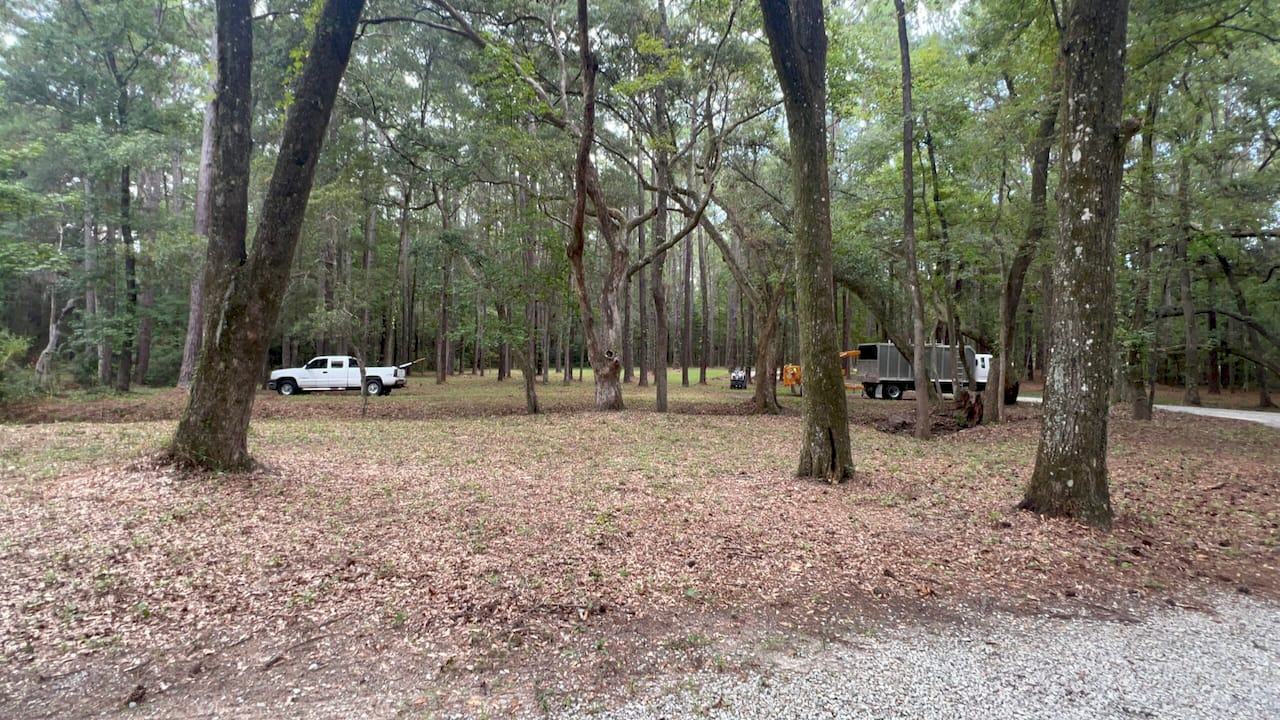
Forestry mulching works by attaching a powered mulching head to a skid steer or tracked carrier, then driving the machine through vegetation while the rotating drum or disc shreds everything in its path into fine wood chips. The mulch falls directly onto the ground, creating an even layer that stays on-site. No debris hauling. No burn piles. No second pass with a separate machine. This single-machine approach is what separates the forestry mulching process from traditional clearing methods, which typically require multiple pieces of equipment and several days of labor.
The Lowcountry’s specific conditions make this method especially relevant. South Carolina’s coastal terrain includes sandy soils prone to erosion, dense stands of pine and hardwood, thick undergrowth of palmetto and wax myrtle, and areas near wetlands where soil disturbance carries real environmental consequences. A mulching machine stays on top of the ground rather than digging into it, which protects root systems, soil structure, and nearby water quality simultaneously.
What machinery is used in the forestry mulching process?
The two primary machine types used in forestry mulching are drum mulchers and disc mulchers, and each serves a different clearing purpose.
| Feature | Drum mulcher | Disc mulcher |
|---|---|---|
| Cutting mechanism | Rotating drum with carbide teeth | Spinning disc with fixed blades |
| Mulch output | Finer, more consistent chips | Coarser material |
| Best use | Utility corridors, stump grinding, dense brush | Larger trees, commercial-scale clearing |
| Tree size capacity | Smaller diameter stems and stumps | Trees up to 14 inches thick |
| Ground disturbance | Minimal, below-ground capability | Low, surface-level operation |
Drum and disc mulchers both use carbide-tipped teeth on rotating heads powered by the skid steer’s hydraulic system. The hydraulic flow requirement is a critical spec: standard flow mulchers need 16 to 30 GPM, while high-flow models require 32 to 50 GPM. Matching the mulcher to the carrier’s horsepower and hydraulic output is not optional. Mismatched equipment bogs down mid-cut, produces incomplete shredding, and can damage both the attachment and the host machine.
Variable torque motors in modern mulchers adjust power dynamically to prevent stalls when the head contacts dense wood. This technology allows operators to maintain consistent cutting speed across varying vegetation types without manual throttle adjustments. For Lowcountry properties with mixed stands of pine, oak, and palmetto scrub, that adaptability directly affects how clean and efficient the final result looks.
Pro Tip: Ask any contractor what hydraulic flow their mulcher requires and whether their carrier matches that spec. If they cannot answer immediately, that is a red flag about their equipment knowledge.
What does the step-by-step forestry mulching process look like?
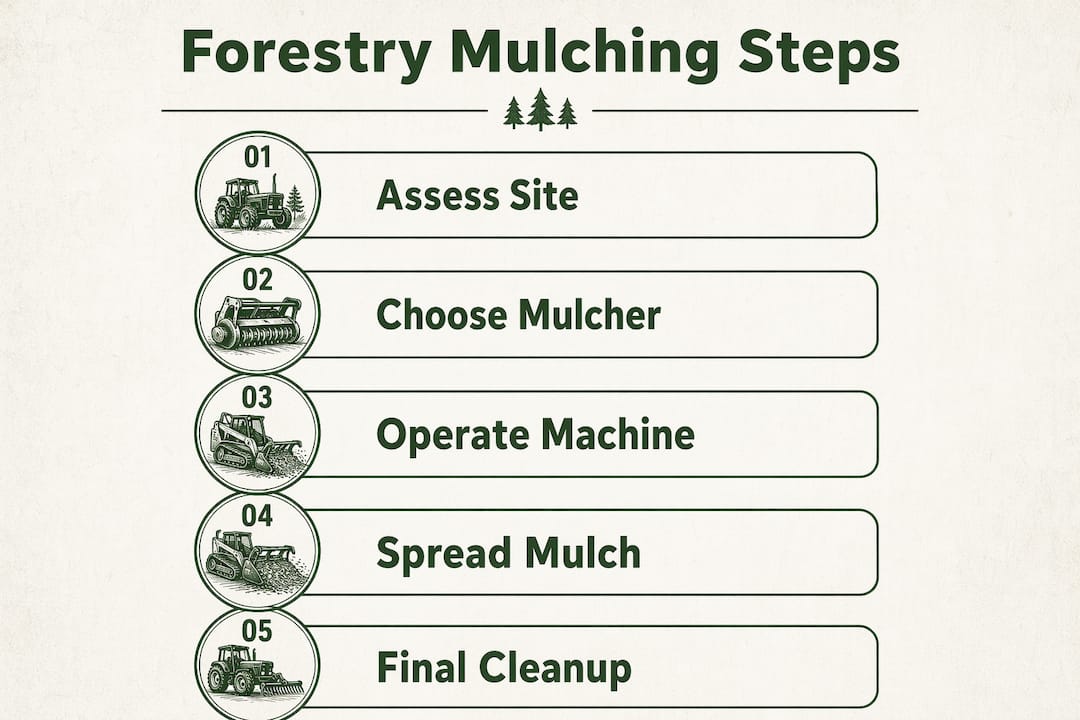
A professional forestry mulching project follows a clear sequence from site preparation through final inspection. Here is how a typical Lowcountry clearing job unfolds:
-
Utility notification. Before any machine touches the ground, the contractor contacts SC811, South Carolina’s centralized one-call system, to locate and mark underground utilities. SC811 has operated as the statewide notification system since 2012. Skipping this step risks striking buried power, gas, or water lines.
-
Site assessment. The operator walks the property to identify tree sizes, terrain changes, wet areas, and any obstacles like fence posts or buried debris. This determines machine selection and the clearing path.
-
Equipment setup. The mulching head is attached to the skid steer or tracked carrier and hydraulic connections are verified. Tooth condition is checked before the first pass.
-
Clearing pass. The operator moves through the vegetation methodically, working in overlapping passes to cover the full area. The machine shreds trees and brush as it advances, depositing mulch directly behind it.
-
Mulch distribution. The operator makes a final pass to spread the mulch layer evenly across the cleared area. Consistent coverage is the goal because thinner spots leave soil exposed.
-
Final inspection. The site is reviewed for missed stems, uneven mulch distribution, or areas near property lines that need attention.
A single acre of moderately dense brush takes 2 to 3 hours with a properly matched mulching machine. Traditional manual clearing of the same area can take days. That speed difference has a direct impact on project cost and schedule for homeowners working within a budget.
Pro Tip: For properties near wetlands or drainage areas, ask your contractor to leave a slightly thicker mulch layer along slopes. Research shows mulch coverage at 500 to 1000 g/m² reduces runoff by 29% to 84%, which matters significantly in the Lowcountry’s wet season.
What are the benefits of forestry mulching vs. traditional clearing?
The benefits of forestry mulching become clear when you compare it directly to bulldozing, burning, and manual clearing methods.
-
No debris hauling. Mulching eliminates the cost of loading, transporting, and dumping cleared vegetation. That alone removes a significant line item from most clearing budgets.
-
No burn permits. Open burning in South Carolina requires permits and carries weather-dependent restrictions. Mulching removes that variable entirely.
-
Soil protection. Bulldozing strips topsoil and leaves bare ground exposed to rain. Mulching leaves the topsoil layer intact and covered.
-
Erosion control. Mulched plant material acts as a blanket over the soil surface, reducing sediment runoff by as much as 96.5% depending on coverage density. For Lowcountry properties near tidal creeks or drainage channels, that protection is significant.
-
Soil health improvement. As the mulch layer decomposes, it returns organic matter to the soil. Mulching can increase soil organic matter by 30 to 40% over time, improving water retention and long-term fertility.
-
Native vegetation recovery. Because the root systems of desirable plants remain undisturbed, native grasses and understory plants can reestablish from existing root stock rather than requiring replanting.
| Method | Debris removal needed | Soil disturbance | Erosion risk | Cost drivers |
|---|---|---|---|---|
| Forestry mulching | No | Minimal | Low | Equipment and operator time |
| Bulldozing | Yes | High | High | Equipment, hauling, grading |
| Manual clearing | Yes | Low to moderate | Moderate | Labor hours |
| Burning | Partial | Low | Moderate | Permits, weather delays |
For a side-by-side look at how these methods compare for Charleston properties specifically, the land clearing vs. forestry mulching breakdown covers the decision factors in detail.
What should Lowcountry homeowners consider before starting a mulching project?
Choosing forestry mulching is the right call for many properties, but a few practical factors determine whether the project goes smoothly or runs into problems.
-
Call SC811 first. This is not optional. SC811 notifies underground facility owners before any excavation or clearing begins. The call is free and required by South Carolina law.
-
Assess vegetation density and tree size. Drum mulchers handle dense brush and smaller trees well. Disc mulchers are better suited for larger-diameter trees. Knowing what is on your property helps you confirm the contractor is bringing the right equipment.
-
Identify sensitive areas. Wetlands, drainage easements, and areas near tidal water require extra care. South Carolina’s environmental regulations protect these zones, and a professional contractor will know where the boundaries are.
-
Understand your land management goal. Clearing for a building pad requires a different approach than clearing for pasture or trail access. Your end goal affects how much mulch is left on-site and whether any grading follows.
-
Budget for the full scope. Forestry mulching costs vary by acreage, vegetation type, and terrain. The land clearing cost per acre guide from Salvationlandmanagement provides realistic figures for South Carolina properties.
-
Verify contractor credentials. Ask for proof of insurance, references from local projects, and confirmation that the operator has experience with Lowcountry terrain and soil conditions.
Working with a contractor who knows the Charleston area means fewer surprises around soil type, seasonal wet conditions, and local permit requirements.
Key takeaways
Forestry mulching is the most efficient and soil-protective clearing method available to Lowcountry landowners, provided the right equipment is matched to the site and a qualified operator handles the work.
| Point | Details |
|---|---|
| Single-step clearing | Forestry mulching cuts, grinds, and spreads mulch in one machine pass, eliminating hauling and burning. |
| Equipment matching matters | Hydraulic flow and mulcher type must match the carrier’s specs to avoid bogging and incomplete shredding. |
| Erosion protection is measurable | Mulch coverage at adequate density reduces sediment runoff by up to 96.5%, critical for Lowcountry slopes. |
| Call SC811 before clearing | South Carolina law requires utility notification before any ground-disturbing work begins. |
| Soil health improves over time | Decomposing mulch returns organic matter to the soil, increasing fertility and moisture retention long-term. |
What working in the Lowcountry taught me about forestry mulching
Most landowners come into a mulching project focused on the result: a cleared lot, a clean fence line, or a usable pasture. What they underestimate is how much the equipment selection and operator experience shape that result. I have seen properties where a contractor brought a disc mulcher to a site full of palmetto scrub and shallow root systems, and the machine chewed through the material unevenly because the tooth geometry was wrong for that vegetation type. The lot got cleared, but the mulch layer was inconsistent and the soil in several spots was more disturbed than it needed to be.
The Lowcountry’s sandy, moisture-variable soils reward a careful approach. A drum mulcher with the right hydraulic flow, operated by someone who has worked this terrain before, produces a mulch layer that actually functions as erosion control rather than just scattered wood chips. That distinction matters when the first heavy rain comes through.
The other misconception worth addressing is that mulching is only for large acreage. Salvationlandmanagement regularly handles residential lots under an acre in the Charleston area where a single mulching pass clears years of overgrowth in a few hours. For homeowners dealing with encroaching vegetation near a fence line or preparing a lot for construction, the method scales down just as effectively as it scales up.
My honest observation after watching many of these projects: the landowners who get the best outcome are the ones who communicate their end goal clearly before the machine starts. Clearing for a lawn requires a different mulch depth than clearing for a gravel driveway approach. That conversation takes five minutes and saves hours of follow-up work.
— SEO
Get professional forestry mulching from Salvationlandmanagement
Salvationlandmanagement serves homeowners and landowners across the Charleston Lowcountry with professional forestry mulching services backed by local experience and properly matched equipment. The team handles residential lots, rural acreage, and commercial sites with the same attention to soil protection, project timelines, and clear communication.
Whether you are clearing a wooded lot for construction, managing overgrown acreage, or reclaiming a fence line, Salvationlandmanagement brings the right machine and the right operator to the job. Contact the team today for a consultation or project quote, and get a clear picture of what your property clearing will involve before any work begins. Visit the land clearing services page to see the full range of options available for South Carolina properties.
FAQ
What is forestry mulching?
Forestry mulching is a land clearing method that uses a single machine to cut, grind, and spread vegetation into a mulch layer on-site. The process requires no debris hauling, no burning, and leaves a protective organic layer that controls erosion and improves soil health.
How long does forestry mulching take per acre?
A properly equipped mulching machine clears one acre of moderately dense brush in 2 to 3 hours, compared to days for manual clearing methods. Project time increases with heavier tree density or difficult terrain.
Does forestry mulching damage the soil?
Forestry mulching causes minimal soil disturbance because the machine operates on the surface rather than digging into the ground. The mulch layer left behind actually protects the soil by reducing runoff and retaining moisture.
Do I need to call SC811 before forestry mulching?
Yes. South Carolina law requires contacting SC811 before any land clearing or excavation to locate underground utilities. The call is free and prevents accidental damage to buried power, gas, and water lines.
Is forestry mulching better than bulldozing for Lowcountry properties?
Forestry mulching is generally better for Lowcountry properties because it preserves topsoil, reduces erosion risk, and eliminates debris hauling costs. Bulldozing strips and displaces topsoil, leaving bare ground exposed to the region’s heavy rainfall and increasing sediment runoff into nearby waterways.