
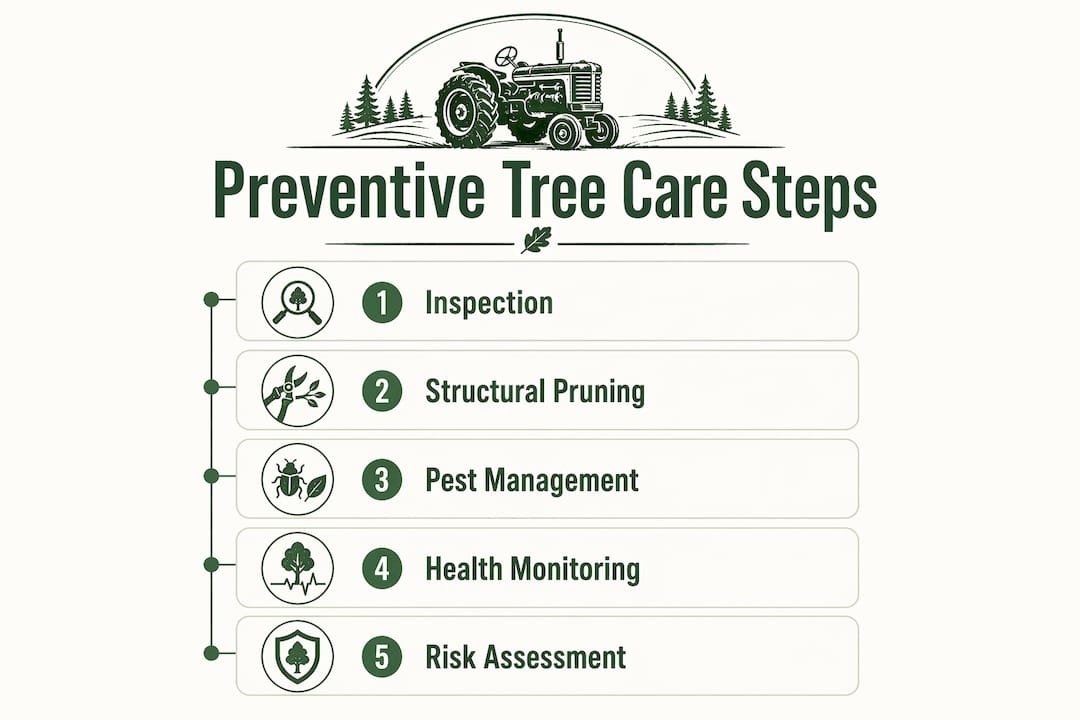
Preventive tree care is the proactive management of tree health and structure to avoid damage, safety hazards, and costly emergency work before problems develop. Known in the industry as plant health care (PHC) or best management practices (BMP), this approach combines scheduled inspections, early detection, and targeted treatments throughout the year. For homeowners and property managers in the Charleston Lowcountry, understanding the role of preventive tree care means protecting your landscape investment, reducing liability, and keeping trees healthy for decades. The alternative, reactive care, consistently costs more and delivers worse outcomes.
What are the key benefits of preventive tree care?
Preventive tree management delivers four measurable categories of benefit: health, safety, financial savings, and property value. Each one compounds over time, making early investment in routine care the most practical choice for any property owner.
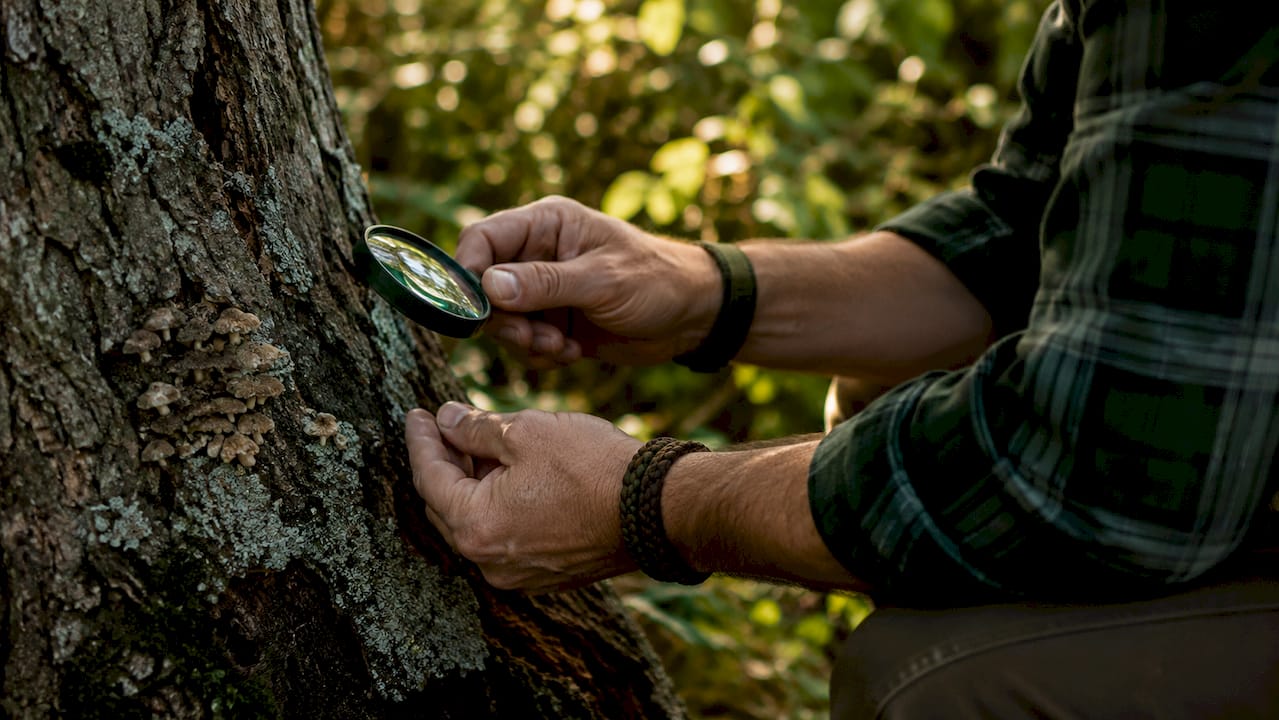
Health benefits start with early detection. Trees can exhibit severe internal decline before any visible symptoms appear on the surface. Routine inspections catch fungal infections, root stress, and pest activity while they are still treatable. Soil management, proper irrigation, and root zone care also fall under this category, directly supporting a tree’s ability to resist disease.
Safety benefits are the most urgent reason to act. Structural defects like weak branch unions, crossing limbs, and decay pockets create real hazards near homes, driveways, and utility lines. Scheduled pruning and risk assessments address these conditions before a storm or wind event turns them into emergencies.
Financial benefits are straightforward. Emergency tree work costs 50–100% more than scheduled preventive services. That premium reflects the urgency, after-hours labor, and equipment mobilization required when a tree fails unexpectedly. Preventive care eliminates most of those scenarios.
- Early pest and disease detection reduces treatment costs significantly
- Structural pruning prevents branch failures that damage roofs, fences, and vehicles
- Scheduled care avoids expensive emergency removals and storm cleanup
- Healthy, well-maintained trees add measurable curb appeal and resale value
- Documented maintenance history supports insurance claims and property assessments
Pro Tip: Keep a simple log of every inspection, pruning visit, and treatment. That record becomes valuable documentation if a tree-related insurance claim ever arises.
How does structural pruning improve long-term tree stability?
Structural pruning is best understood as preventive architecture for trees. The goal is to shape strong branch structure early in a tree’s life so that corrective work later is minimal or unnecessary. Structural pruning of young trees prevents branch failure by correcting defects early, with pruning recommended as frequently as every 2–3 years during the first 10–15 years of growth. Early pruning is easier and far less expensive than addressing failures in mature trees.
The process follows a clear sequence:
- Identify the central leader. Select one dominant upright stem and remove competing leaders that create weak, narrow branch unions.
- Remove crossing and rubbing limbs. Branches that contact each other create wounds and entry points for disease.
- Address co-dominant stems. Two stems of equal diameter competing for dominance create a structural weak point prone to splitting.
- Space scaffold branches. Distribute major lateral branches vertically and radially around the trunk for balanced load distribution.
- Remove lower side branches gradually. Formative pruning from year one through roughly five years shapes strong structure by removing lower side branches in stages, not all at once.
One critical limit governs all pruning work: removing more than 25% of a tree’s live foliage annually stresses the tree and reduces its ability to defend against pests and disease. For mature trees, the recommended limit drops to 10–15%. Staying within these thresholds keeps the tree’s energy focused on growth and wound compartmentalization.
| Pruning Practice | Recommended Approach |
|---|---|
| Annual foliage removal limit | No more than 25% for young trees; 10–15% for mature trees |
| Pruning frequency for young trees | Every 2–3 years during the first 10–15 years |
| Cut placement | Just outside the branch collar; never flush to the trunk |
| Topping | Never recommended; causes decay, weak regrowth, and long-term structural failure |
| Formative pruning window | Year one through approximately year five |
Pro Tip: Never top a tree. Topping removes large portions of the crown and triggers rapid, weakly attached regrowth that creates more hazards than it solves. If a tree has outgrown its space, consult a Certified Arborist about proper crown reduction or removal.
Understanding the difference between pruning and trimming also matters here. The Salvationlandmanagement blog covers pruning versus trimming in detail, which helps homeowners communicate clearly with their service provider.
What role does risk management play in preventive tree care?
Tree risk management is a structured process for identifying hazardous conditions, prioritizing responses, and reducing the likelihood of tree failure near people and property. It is not about eliminating every possible risk. Tree risk management focuses on prioritizing real risks, supported by documentation, rather than reacting to every concern without context.
ISA Tree Risk Assessment Qualified (TRAQ) arborists conduct these assessments using a standardized methodology developed by the International Society of Arboriculture. They evaluate three factors: the likelihood of failure, the likelihood of a target being struck, and the consequences of that impact. The combination of all three determines the overall risk rating and the recommended response.
Key components of a sound tree risk program include:
- Annual or bi-annual inspections for trees near structures, utility lines, or high-traffic areas
- Post-storm assessments after significant wind, ice, or flooding events that may have caused hidden structural damage
- Documented risk ratings that allow property managers to prioritize spending by actual risk level rather than guessing
- Mitigation options ranging from targeted pruning and cabling to full removal when a tree cannot be made safe
- Inventory records that track each tree’s condition over time, supporting budget planning and liability management
Property managers in particular benefit from treating trees as assets in a formal maintenance program. Inventories, scheduled inspections, and detailed records mirror the asset-management approach used for buildings and equipment. Salvationlandmanagement’s guide on hiring tree removal after a storm outlines what to do when a risk assessment reveals a tree that cannot be saved.
Which health care methods prevent pest and disease outbreaks?
Preventive plant health care (PHC) is broader than pest spraying. Effective intervention starts with identifying vulnerabilities including site conditions, soil quality, and canopy factors before any treatment is applied. Random spraying without diagnosis can harm beneficial insects, miss the actual problem, and create chemical resistance in target pests.
A diagnosis-first approach works through a clear framework:
- Site and soil assessment. Compacted soil, poor drainage, and low organic matter are the root cause of many tree health problems. Aerating the root zone and adding organic mulch addresses these conditions directly.
- Watering management. Both overwatering and drought stress weaken a tree’s natural defenses. Proper irrigation scheduling, especially during Charleston’s hot summers, is a core preventive measure.
- Integrated Pest Management (IPM). IPM combines monitoring, biological controls, and targeted chemical treatments only when pest populations exceed a defined threshold. This approach reduces chemical use and protects the broader landscape ecosystem.
- Seasonal monitoring. Many pests and diseases follow predictable seasonal cycles. Monitoring during high-risk windows, such as spring leaf-out and late summer, allows early intervention before populations establish.
- Repeat assessments. A year-round preventive program reassesses conditions during the growing season and adjusts treatments as new threats emerge. A single annual visit is not sufficient for trees under stress.
The distinction between broad PHC and narrow spraying matters because it changes outcomes. A tree receiving proper soil care, correct irrigation, and timely IPM monitoring will outperform a tree that only receives reactive chemical applications every time a symptom appears.
How do you build an effective preventive tree care program?
Building a preventive tree care program requires four practical steps that any homeowner or property manager can follow.
- Hire a Certified Arborist. The ISA Certified Arborist credential verifies that a practitioner has passed a standardized exam and maintains continuing education. Verify credentials at the ISA website before hiring. For Charleston-area properties, look for arborists familiar with local species like live oak, loblolly pine, and Southern magnolia.
- Set an inspection schedule based on risk. Trees within striking distance of a structure, utility line, or frequently used outdoor space warrant annual inspections. Trees in open areas with no targets may need assessment only every two to three years. Post-storm checks are always warranted after significant weather events.
- Keep written records. Document every visit, including the date, the arborist’s findings, any work performed, and the recommended follow-up timeline. This record supports insurance claims, informs future contractors, and tracks a tree’s long-term condition.
- Budget proactively. Preventive care is best managed as an ongoing program that maximizes tree longevity and benefits regardless of property type. Setting aside a fixed annual budget for inspections and maintenance is far more predictable than absorbing the cost of an emergency removal.
Recognizing early warning signs also reduces response time. Cracks in the trunk, mushroom growth at the base, dead wood in the upper crown, and sudden leaf loss outside of fall are all indicators that a tree needs professional evaluation. Salvationlandmanagement’s resource on when to remove versus prune helps homeowners make that call with confidence.
Pro Tip: Schedule your primary inspection in late winter or early spring before leaf-out. Bare branches make structural defects, dead wood, and co-dominant stems far easier to spot.
Key takeaways
Preventive tree care is the most cost-effective strategy for maintaining safe, healthy, and valuable trees on any residential or managed property.
| Point | Details |
|---|---|
| Start with inspections | Annual or bi-annual assessments by a Certified Arborist catch problems before they become emergencies. |
| Prune young trees early | Structural pruning every 2–3 years during the first 10–15 years prevents costly defects in mature trees. |
| Respect foliage limits | Never remove more than 25% of live foliage annually to protect tree vigor and wound defense. |
| Diagnose before treating | Identify soil, site, and pest factors first; random spraying misses root causes and harms beneficial organisms. |
| Document everything | Written maintenance records support insurance claims, budget planning, and long-term tree health tracking. |
What experience teaches about preventive tree care
Most tree failures I see are not surprises. They are the result of years of deferred maintenance, a missed inspection, or a pruning job done wrong a decade earlier. The homeowner is always shocked, but the arborist rarely is.
The biggest misconception I encounter is that trees are self-sufficient. They are not, especially in urban and suburban settings where soil is compacted, roots are restricted, and storm exposure is constant. A tree growing in a Charleston yard faces stresses that a forest tree never encounters. It needs help.
The second misconception is that preventive care is expensive. The math does not support that view. Emergency removals, storm damage repairs, and liability claims all cost far more than a scheduled inspection and a pruning visit. The homeowners who invest in routine care consistently spend less over a ten-year period than those who wait for problems to appear.
My honest recommendation: treat your trees the way you treat your roof or your HVAC system. Schedule regular checkups, address small issues before they grow, and work with a qualified professional who can give you an honest assessment. The trees on your property are long-term assets. Manage them that way.
— SEO
How Salvationlandmanagement supports your tree care program
Salvationlandmanagement serves homeowners and property managers across the Charleston Lowcountry with professional tree services built around proactive care and safety. Whether you need a thorough risk assessment, structural pruning, or a tree that has reached the end of its safe life removed, the Salvationlandmanagement team brings the equipment, credentials, and local knowledge to handle the job correctly. The team serves communities including Charleston, Mount Pleasant, and Johns Island. For properties requiring more than individual tree work, professional tree removal services and land clearing support larger-scale preventive management programs. Contact Salvationlandmanagement today to schedule an inspection and get a clear plan for your property’s trees.
FAQ
What is the role of preventive tree care?
Preventive tree care is a proactive program of inspections, structural pruning, health monitoring, and pest management designed to maintain tree health and prevent safety hazards before they develop. The goal is to address problems while they are small and treatable rather than responding to emergencies.
How often should trees be inspected?
Trees near structures or utility lines should be inspected annually or bi-annually by an ISA Certified Arborist. Trees in lower-risk locations may need assessment every two to three years, plus a check after any major storm event.
What is structural pruning and why does it matter?
Structural pruning shapes a tree’s branch architecture during its early years to prevent weak unions, crossing limbs, and co-dominant stems from becoming hazards later. Pruning young trees every 2–3 years during the first 10–15 years is far less expensive than correcting failures in mature trees.
How much does preventive tree care cost compared to emergency work?
Emergency tree work costs 50–100% more than scheduled preventive services. Proactive care eliminates most emergency scenarios by addressing structural and health issues before they lead to failure.
What are early warning signs that a tree needs professional attention?
Cracks in the trunk, mushroom growth at the base, dead wood in the upper crown, sudden leaf loss outside of fall, and leaning that has changed recently all indicate a tree needs evaluation by a Certified Arborist as soon as possible.