
Stump grinding is the most effective method for removing tree stumps from residential yards because it eliminates safety hazards, prevents pest infestations, and reclaims usable outdoor space. Why stump grinding is better than leaving tree stumps in your yard comes down to three practical realities: stumps left in place attract termites and carpenter ants, create tripping hazards, and block landscaping projects. Professional stump grinding typically costs $150–$500 per stump and takes 30–90 minutes, making it far more efficient than chemical treatments or manual digging. Salvationlandmanagement serves homeowners across the Charleston Lowcountry who want their yards safe, clean, and ready to use.
What problems do leftover tree stumps cause in your yard?
Leaving a tree stump in your yard creates problems that grow worse over time. Most homeowners underestimate how quickly a decaying stump becomes a liability for their property.
Pest infestations are the most serious risk. Decaying wood attracts termites, carpenter ants, and fungi that spread disease to nearby healthy plants and structures. Once termites establish a colony in a stump, they can move into your home’s foundation or fence posts within a single season. Fungi spread through root systems underground, meaning a stump you can’t see actively working against your yard.
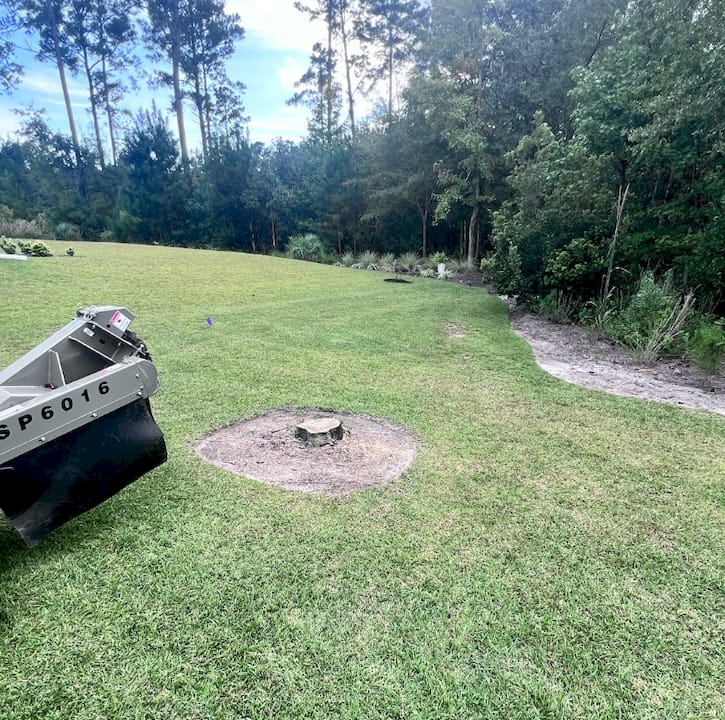
Safety hazards are constant and easy to overlook. A stump hidden by grass or ground cover becomes a tripping hazard for children, guests, and anyone mowing the lawn. Stumps damage mower blades and create uneven cutting patterns, making every mowing session slower and more expensive. Replacing a mower blade costs money. A trip and fall costs more.
Here is a summary of the main tree stump problems homeowners face:
-
Pest habitat: Termites, carpenter ants, and wood-boring beetles colonize decaying stumps quickly
-
Fungal spread: Root rot and fungal disease travel underground to neighboring plants and trees
-
Tripping hazard: Stumps obscured by grass or mulch cause falls, especially for children and older adults
-
Lawn damage: Mower blades strike stumps, causing blade damage and uneven grass cutting
-
Root regrowth: Many tree species resprout from the stump, producing new shoots that require repeated cutting
-
Reduced yard space: Stumps block planting beds, patios, play areas, and other landscaping improvements
Root regrowth is a problem many homeowners do not anticipate. Some tree species resprout easily from the root crown after the trunk is removed, sending up new shoots that require repeated cutting for years. That ongoing labor adds up fast.
How does stump grinding work, and why is it effective?
Stump grinding is a mechanical removal process that uses a rotating cutting wheel to chip a stump down below ground level. The machine grinds the wood into small chips, leaving the roots in place to decompose naturally underground.
Here is how a professional stump grinding job proceeds from start to finish:
-
Site assessment: The operator inspects the stump size, location, and surrounding landscaping to plan the approach
-
Utility check: Professional operators verify underground utilities before grinding to prevent damage to gas, water, or electrical lines
-
Grinding: The rotating cutting wheel chips the stump 6–12 inches below the soil surface, destroying the root crown
-
Chip collection: The machine produces a large volume of wood chips that can be raked into the hole or repurposed
-
Site cleanup: The operator fills the depression with chips or soil and leaves the area ready for replanting or landscaping
Stump grinding avoids large-scale digging and does not require soil importation, which keeps costs down and preserves the surrounding lawn. The roots left underground decompose gradually, enriching the soil with organic matter over time. That natural process is actually beneficial for soil health.
The wood chips produced are a useful byproduct. Grinding produces 2–3 times the stump volume in mulch material, which retains soil moisture and suppresses weeds in garden beds. You get a free mulch supply as part of the job.
Pro Tip: If you plan to reseed grass over the ground area after grinding, remove most of the wood chips first. Fresh wood chips deplete nitrogen from the soil as they decompose, which can prevent grass seed from establishing properly.
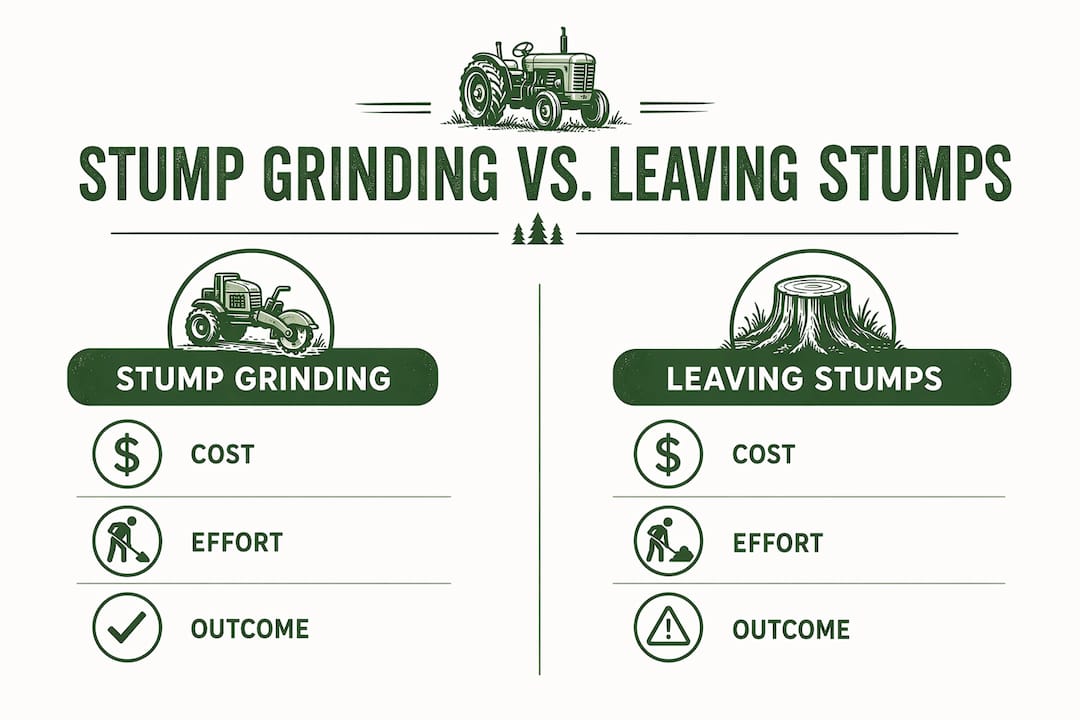
Stump grinding vs. leaving stumps: cost, effort, and outcome
The practical differences between grinding a stump and leaving it in place are significant. This comparison covers what each choice actually costs you in time, money, and yard quality.
| Factor | Stump Grinding | Leaving the Stump |
|---|---|---|
| Upfront cost | $150–$500 per stump, professionally done | $0 upfront |
| Time to complete | 30–90 minutes per stump | No action required |
| Pest risk | Eliminated by removing decaying wood | High; termites and ants colonize within months |
| Lawn maintenance | Mowing restored to normal | Ongoing blade damage and uneven cutting |
| Regrowth control | Root crown destroyed; no resprouting | Repeated cutting of new shoots required |
| Yard usability | Full space reclaimed for landscaping | Stump blocks planting, paving, or play areas |
| Long-term cost | One-time expense | Ongoing pest control, mowing damage, regrowth labor |
The “free” option of leaving a stump is rarely free in practice. Pest control treatments for a termite infestation can cost several hundred to several thousand dollars, far exceeding the cost of grinding. Mower blade replacements, regrowth cutting, and lost landscaping space add further hidden costs over time.
Professional grinding takes 30–90 minutes and is chosen in 80% of residential cases for its speed and effectiveness. That statistic reflects a clear homeowner preference once people understand the full picture.
DIY options exist but carry real drawbacks. Chemical removal takes 4–8 weeks and still leaves a decaying stump in place during that period. Renting a stump grinder without experience risks property damage and personal injury. Manual digging works only for small stumps under 12 inches and requires hours of hard physical labor. For most homeowners, professional grinding delivers the best outcome at a reasonable price.
Common misconceptions about stump grinding
Many homeowners delay grinding because they believe it is an optional upgrade rather than practical yard maintenance. That belief leads to avoidable problems and higher costs down the road.
Misconception 1: “The stump will just rot away on its own.” A stump can take 10–20 years to fully decompose, depending on the tree species and local conditions. During that entire period, it remains a pest habitat, a tripping hazard, and a barrier to landscaping. Waiting is not a neutral choice.
Misconception 2: “Stump grinding is too expensive.” Experts classify stump grinding as essential property maintenance, not a luxury service. The upfront cost is predictable and one-time. The costs of ignoring a stump, including pest control, mower repairs, and regrowth management, are recurring and unpredictable.
Misconception 3: “I can handle it myself.” Homeowners consistently underestimate the labor and risk involved in DIY stump removal. Renting a grinder without professional experience is less cost-effective and can cause damage to underground utilities, nearby roots, or the machine itself.
The wood chip byproduct is one of the most overlooked benefits of the process. Those chips work well as mulch in garden beds, around trees, or along pathways. You reduce waste and improve your garden at the same time.
Timing matters more than most homeowners realize. Scheduling grinding immediately after tree removal avoids a second mobilization fee and reduces total project cost. Combining tree removal and stump grinding in a single visit is the most cost-efficient approach available.
Pro Tip: Ask your tree service provider to include stump grinding in the same project quote as tree removal. Bundling the two services almost always costs less than scheduling them separately.
Key takeaways
Stump grinding is the most cost-effective and practical solution for removing tree stumps because it eliminates pest risks, restores yard usability, and prevents regrowth in a single visit.
| Point | Details |
|---|---|
| Stumps attract pests fast | Termites and carpenter ants colonize decaying stumps quickly, threatening nearby structures. |
| Grinding costs $150–$500 | Professional removal takes 30–90 minutes and prevents far more expensive long-term problems. |
| Leaving stumps has hidden costs | Pest control, mower damage, and regrowth labor add up well beyond the grinding fee. |
| Wood chips are reusable mulch | Grinding produces 2–3 times the stump volume in mulch, useful for garden beds and moisture retention. |
| Bundle services to save money | Scheduling grinding with tree removal in one visit avoids extra mobilization fees. |
The case for acting sooner rather than later
After working with property owners across many different yard situations, one pattern stands out clearly: the homeowners who wait on stump grinding always wish they had acted sooner. The stump that seemed harmless in spring becomes a termite problem by fall and a regrowth headache the following year.
The argument for leaving a stump in place usually comes down to cost or inconvenience. Both concerns are understandable. But the math rarely supports waiting. A single pest control treatment for a termite infestation costs more than most stump grinding jobs. Repeated mowing around a stump adds labor time every week for years. The stump that “isn’t bothering anyone” is quietly creating conditions that will bother you later.
What I find most valuable about professional grinding, compared to DIY methods, is the utility check and root crown depth. A homeowner renting a grinder for the first time may not grind deep enough to destroy the root crown, which means the stump resprouts. A professional operator knows the correct depth for each tree species and checks for underground lines before starting. That knowledge is worth the service fee on its own.
My recommendation is straightforward: schedule stump grinding at the same time as tree removal, choose a licensed local operator, and repurpose the wood chips as mulch. You solve three yard problems in one visit and walk away with a usable, clean outdoor space. For Charleston Lowcountry homeowners, the humid climate accelerates both pest colonization and fungal spread, which makes timely grinding even more important than in drier regions.
— SEO
Professional stump grinding services in charleston, SC
Salvationlandmanagement provides professional stump grinding and tree removal for residential properties across the Charleston area, including Johns Island, Mount Pleasant, and Kiawah Island.
Their crews use professional-grade grinding equipment to remove stumps efficiently with minimal disruption to your lawn and surrounding landscaping. Every job includes a utility check before grinding begins, and the team handles cleanup so you are left with a ready-to-use yard. Salvationlandmanagement combines tree removal and stump grinding in a single visit when possible, saving you time and money on mobilization. If you are ready to reclaim your yard, contact Salvationlandmanagement for a quote on land clearing and stump services in the Charleston Lowcountry.
FAQ
Is stump grinding necessary after tree removal?
Stump grinding is considered essential property maintenance, not an optional service. Leaving a stump creates pest habitats, tripping hazards, and regrowth problems that cost more to address later.
How much does professional stump grinding cost?
Professional stump grinding typically costs $150–$500 per stump and takes 30–90 minutes to complete. Scheduling it alongside tree removal reduces total cost by eliminating a second service visit.
Can i reuse the wood chips from stump grinding?
Yes. Grinding produces 2–3 times the stump volume in wood chips that work well as garden mulch for moisture retention and weed suppression. Remove chips before reseeding grass to avoid nitrogen depletion in the soil.
Will a tree stump grow back after grinding?
Grinding destroys the root crown growth tissue, which prevents resprouting effectively. Chemical treatments and manual cutting do not reliably destroy the root crown, which is why those methods often result in regrowth.
How long does it take for a stump to decompose naturally?
A stump left in place can take 10–20 years to fully decompose, depending on tree species and climate. During that time it remains a pest habitat and landscaping obstacle, making grinding the far more practical choice.