
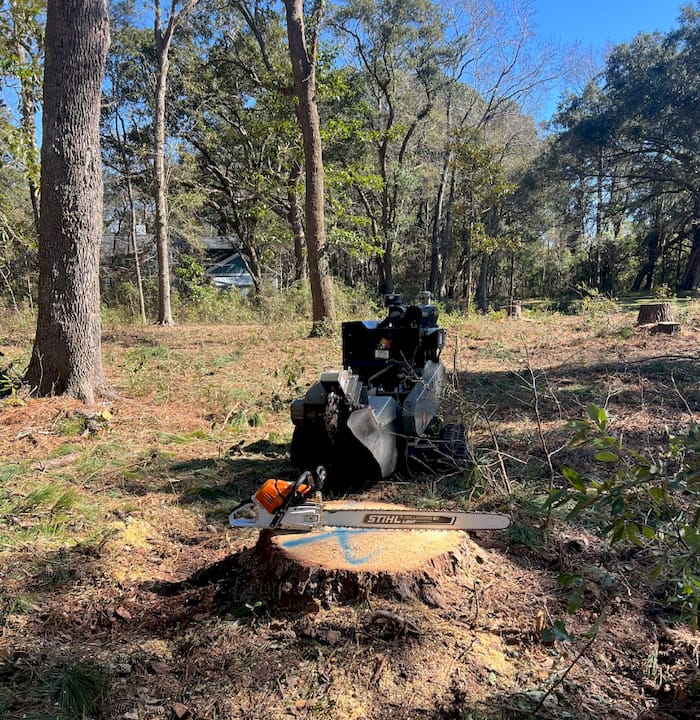
Tree stumps left on your James Island property are defined as active hazards that cause pest infestations, fungal disease, safety injuries, landscape damage, and underground root disruption. These five problems caused by tree stumps worsen over time and directly affect your property value, maintenance costs, and homeowner liability. Whether a storm dropped a tree last season or an aging oak was cut years ago, the stump left behind is never a neutral presence. Salvationlandmanagement works with James Island homeowners regularly and sees the same compounding damage patterns repeat across the Charleston Lowcountry. Addressing stumps promptly is the most cost-effective decision you can make for your property.
What are the 5 problems tree stumps cause for James Island homeowners?
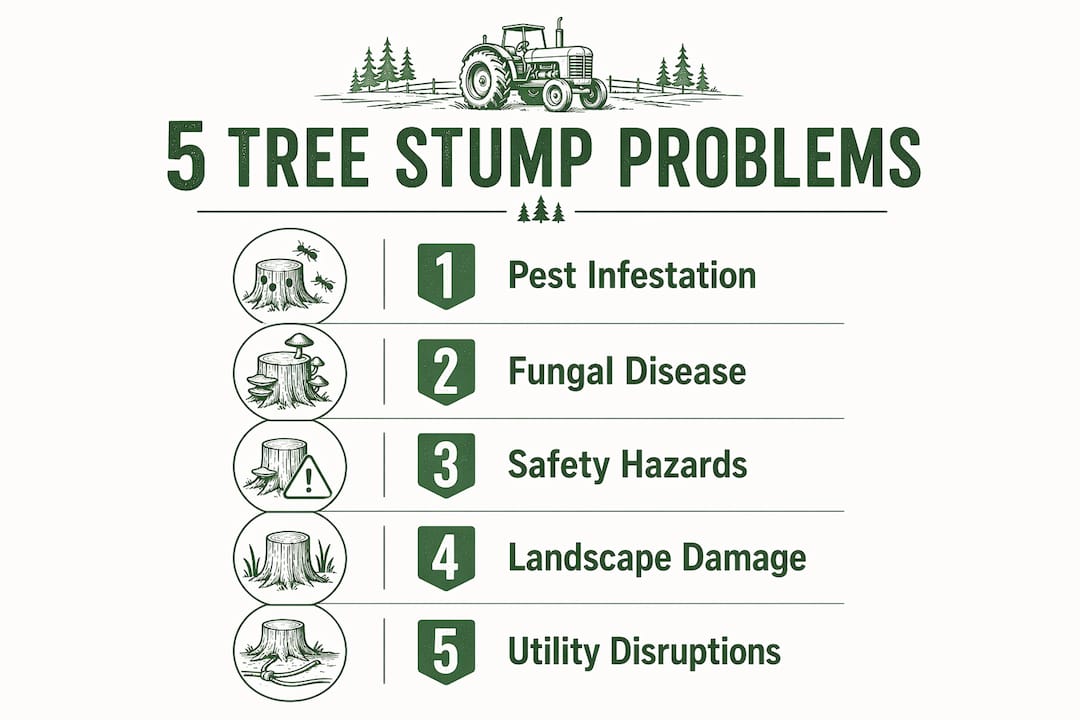
The five core problems are pest infestation, fungal disease spread, safety hazards, landscape and structural disruption, and underground root damage. Each problem starts small and grows more expensive the longer a stump sits. James Island’s warm, humid climate accelerates wood decay, which speeds up every one of these risks compared to drier regions. Understanding each problem in detail helps you make an informed decision about removal timing and method.
What pest infestations do tree stumps attract on James Island?
Decaying stumps attract carpenter ants, termites, and wood-boring beetles as primary colonizers. These insects establish colonies inside the rotting wood, then migrate outward toward your home’s foundation, deck, siding, and any nearby wood structures. The stump acts as a launching point. Once the stump population grows large enough, satellite colonies form inside your home.
The most common pests found in James Island stumps include:
-
Termites: Subterranean termites thrive in moist, decaying wood and move underground directly toward structural wood in your home.
-
Carpenter ants: They do not eat wood but excavate galleries inside it, weakening decks, fences, and framing over time.
-
Wood-boring beetles: Species like the Asian longhorned beetle and powderpost beetle tunnel through wood and can spread to firewood stacks and nearby structures, multiplying pest populations across your yard.
-
Bark beetles: These target stressed or dead wood first, then move to living trees nearby.
The structural repair costs from a termite infestation routinely reach thousands of dollars. Removing the stump eliminates the primary breeding site before insects establish a foothold in your home.
Pro Tip: If you see sawdust-like frass or small exit holes in a stump, insects are already active. Schedule removal immediately rather than waiting for a seasonal service window.
How do fungal diseases spread from stumps to healthy trees?
Fungal diseases like honey fungus establish in decaying stumps and spread underground through root-like structures called rhizomorphs. These rhizomorphs travel more than 30 feet through soil, contacting and infecting the root systems of healthy trees nearby. This is one of the most underestimated James Island landscaping concerns because the damage happens underground and out of sight.
Symptoms that a nearby tree has been infected include:
-
Wilting and yellowing leaves outside of normal seasonal change
-
Dieback starting at branch tips and progressing inward
-
Mushroom clusters appearing at the base of a previously healthy tree
-
Soft, discolored bark near the root collar
Fungal infections often go unnoticed until trees show wilting and yellow leaves. By that point, the damage is usually fatal and irreversible. Losing multiple mature trees on a James Island property is a significant financial and aesthetic loss, and it all traces back to one unremoved stump.
Pro Tip: Check the base of trees within 30 feet of any stump each spring. Mushroom clusters at ground level are a reliable early warning sign of honey fungus activity.
What safety hazards do leftover stumps create for homeowners?
Tree stumps become hidden tripping hazards as they decay and blend into the surrounding lawn. Grass grows over low stumps, mulch covers them, and seasonal leaf fall conceals them entirely. A visitor, child, or elderly family member can trip and suffer a serious injury without any warning.
The liability consequences for James Island homeowners are direct:
-
Personal injury claims: If someone trips on your stump and is injured, you are liable as the property owner.
-
Insurance premium increases: Liability from stump-related injuries is often underestimated by homeowners, and a filed claim typically raises your homeowner’s insurance premium.
-
Legal costs: Injury lawsuits, even when settled out of court, carry attorney fees and settlement costs that far exceed stump removal pricing.
-
Lawn equipment damage: Mower blades striking a hidden stump or surface root cause equipment damage and can throw debris at high speed toward people nearby.
Homeowner stump hazards are not hypothetical. They are a recognized liability category in property insurance. Removing the stump removes the exposure entirely.
Pro Tip: Walk your yard before any outdoor gathering and mark any stumps with a visible flag or cone. This does not eliminate liability but demonstrates reasonable care if an incident occurs.
How do stumps and roots disrupt landscaping and underground utilities?
Decaying stumps cause soil to sink as the root mass decomposes beneath the surface. Soil settling of 8–12 inches occurs over 10–15 years, creating depressions that damage patios, crack sidewalks, and undermine irrigation systems. This is a slow process, which is exactly why many James Island homeowners do not connect the damage to the original stump.
| Damage type | Cause | Consequence |
|---|---|---|
| Soil depression | Root mass decomposition | Uneven lawn, standing water, foundation stress |
| Cracked pavers or patios | Root expansion and soil shift | Costly hardscape repairs |
| Irrigation line damage | Root intrusion into pipes | Water loss, dry zones, repair bills |
| Foundation stress | Soil settling near structure | Long-term structural repair costs |
| Regrowth shoots | Incomplete root removal | Multiple new sprouts complicating mowing |
Root systems extend 3–5 times the diameter of the visible stump. A stump that looks small above ground may have roots spreading 15–20 feet in every direction. Those roots continue growing after the tree is cut, pushing against underground utility lines, irrigation pipes, and concrete structures. Improper or partial removal triggers regrowth with multiple shoots, multiplying the problem rather than solving it.
Underground utility lines near stumps require a utility locate before any removal work begins. Hitting a gas or water line during DIY removal creates a serious safety and financial emergency.
Why is professional stump removal the right choice for James Island homeowners?
Professional stump removal in James Island involves two primary methods: grinding and full extraction. Each serves a different purpose, and choosing the wrong one creates new problems.
-
Stump grinding: Removes the visible stump 6–12 inches below grade using a rotating cutting wheel. It is faster and less expensive than full removal. The root ball remains in the ground and decomposes naturally. Grinding works well for most residential situations where replanting or construction is not planned.
-
Full extraction: Uses a mini-excavator to remove the entire root ball. This method is required before new construction, major landscaping, or replanting in the same location. It eliminates all regrowth potential.
Residential stump grinding costs $150–$500 nationally, with price variation based on stump diameter, wood hardness, and equipment access. James Island properties with limited yard access or large hardwood stumps fall toward the higher end of that range.
DIY removal carries real injury risk. Chainsaw kickbacks cause about 20% of tree work emergency room visits. That statistic reflects the danger of working with cutting equipment near ground-level obstacles, roots, and soil. Professional crews bring the right equipment, carry liability insurance, and perform utility locates before breaking ground.
Pro Tip: Always ask a removal contractor for proof of insurance and a written quote before work begins. A reputable company provides both without hesitation. You can review what to expect from stump grinding costs in the Charleston area before calling for a quote.
Key takeaways
Tree stumps on James Island properties cause five compounding problems: pest infestation, fungal disease, safety liability, landscape disruption, and underground root damage, all of which worsen the longer removal is delayed.
| Point | Details |
|---|---|
| Pest infestation risk | Termites and carpenter ants colonize stumps and migrate to home structures, causing costly damage. |
| Fungal disease spread | Honey fungus travels 30+ feet underground, killing nearby healthy trees before symptoms appear. |
| Safety and liability | Hidden stumps cause tripping injuries that trigger insurance claims and premium increases. |
| Landscape and structural damage | Root decomposition causes 8–12 inches of soil settling over 10–15 years, cracking patios and damaging irrigation. |
| Professional removal is safer | Grinding costs $150–$500 and eliminates risks that DIY removal cannot safely address. |
What I’ve learned about stump problems after years in the Charleston Lowcountry
Most homeowners I talk with underestimate how fast a stump becomes a serious problem in this climate. James Island’s heat and humidity accelerate wood decay faster than national averages suggest. A stump that looks solid in the spring can be actively hosting termites by fall.
The mistake I see most often is treating stump removal as a cosmetic decision. Homeowners think, “It’s not hurting anything.” But by the time they call for help, there are usually two or three compounding issues already in progress. Pest activity in the stump, a soft spot in the lawn from root decay, and a crack forming in a nearby patio edge. None of those problems announced themselves clearly. They built quietly.
The other misunderstanding is about timing. Homeowners often wait until they are planning a landscaping project to address stumps. That is the most expensive time to deal with them because the root system has had years to spread and the soil has already started settling. Removing a stump the season after a tree comes down costs less and prevents every downstream problem covered in this article.
My honest recommendation: treat stump removal as part of the tree removal job, not an afterthought. The preventive tree care mindset saves James Island homeowners real money over time.
— SEO
How Salvationlandmanagement helps James Island homeowners with stump removal
Salvationlandmanagement provides professional stump grinding, full stump extraction, and complete land clearing services for James Island and the broader Charleston Lowcountry. Every job includes a utility locate before work begins, a written quote, and a licensed and insured crew with the equipment to handle any stump size or yard configuration.
If you have stumps from storm damage or aging trees, Salvationlandmanagement offers tree removal and stump services tailored to residential properties across James Island. The team handles projects of any complexity, communicates clearly at every step, and completes work on schedule. Contact Salvationlandmanagement today for a no-obligation quote and protect your property from the compounding problems a stump leaves behind.
FAQ
What pests do tree stumps attract in James Island yards?
Decaying stumps attract termites, carpenter ants, and wood-boring beetles. These insects establish colonies in the stump and migrate to nearby home structures, causing costly damage over time.
How much does stump removal cost in James Island, SC?
Stump grinding costs $150–$500 nationally, with the final price depending on stump diameter, wood type, and site access. Larger hardwood stumps with limited equipment access fall toward the higher end.
Can a tree stump damage my home’s foundation?
Yes. Root systems extend 3–5 times the stump diameter and cause soil settling of 8–12 inches over 10–15 years, which stresses foundations, cracks patios, and damages underground irrigation lines.
Is stump grinding enough, or do I need full removal?
Grinding works for most residential situations, removing the stump 6–12 inches below grade. Full extraction with a mini-excavator is required if you plan to replant, build, or need to eliminate all regrowth potential.
Are homeowners liable if someone trips on a stump?
Yes. Property owners are liable for injuries caused by hazards on their land. A stump-related injury claim can increase your homeowner’s insurance premium and result in legal costs that far exceed the price of removal.